Practical / What to take home
Buy the thing
with a number
There is almost no English-language discussion of what to buy in Wuhan. That absence is useful: it means the usual international souvenir advice for this city is simply invented. We went to the registers instead — national heritage lists, the time-honoured-brand list, a local quality standard and the museum's own notices — and kept only the things that can be checked.
Buy something with a verifiable register number: Han embroidery, a Wuhan wooden boat model, or a Hubei Provincial Museum piece. Skip the snack boxes sold nationwide. The catch is that museum products are sold only inside the museum, wooden and food items need declaring at some borders, and we publish no prices because we found no primary-source price list.
We do not recommend shops, we take no commission and we publish no prices. What follows is a short list with a reason and a bad side for each item, followed by the part that actually ruins a trip: what happens at the airport and at the border when the souvenir is a jar of sesame paste, a carved wooden boat or a bronze replica.
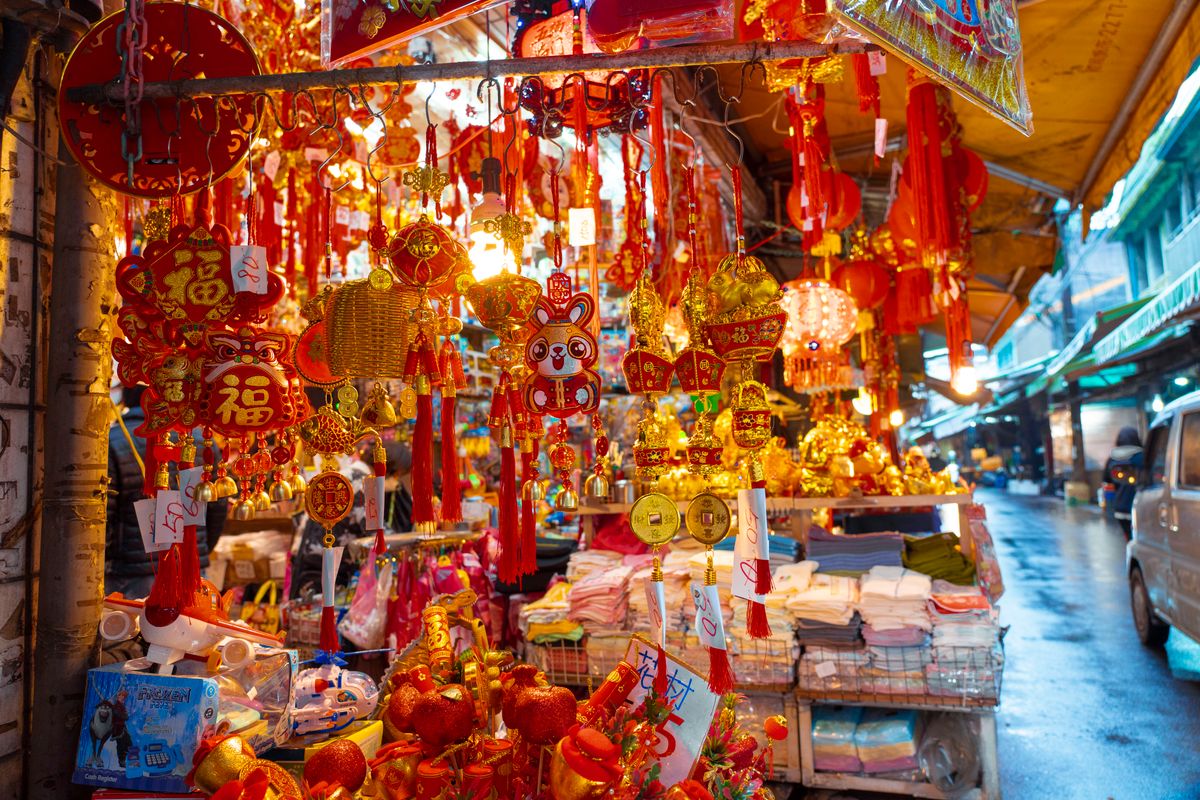
We searched the English travel web — the big guide sites, the forums, the Q&A sites and the community-edited guides — for Wuhan souvenirs and Hubei specialities and found essentially nothing beyond a single line about a shopping street "hawking souvenirs". There is no international consensus to report. The only substantial English-language material on this subject is customs and aviation regulation. So this page is built from Chinese primary sources instead, and says so.
The short list
Han embroidery 汉绣
The strongest claim on this page. Han embroidery is on the national register with a project number, a category (traditional fine art), a batch year and a designated protecting institution — all checkable on the official heritage site. If you want one object that is genuinely from this city rather than from a generic "China" gift shelf, this is it.
Check the national heritage register entry
The catch: the register certifies a craft, not the trinket in front of you. Street stalls selling "intangible-heritage handwork" rarely carry any verifiable project reference, and we have no primary-source price data, so ask what you are actually buying and expect a wide range of prices.
Wuhan wooden boat model carving 武汉木雕船模
The most river-specific object in Wuhan. A miniature carved boat is a direct reference to a city built on two rivers and a dockside economy, and the craft itself has a national register entry tied to Wuhan rather than to the province in general.
Check the national heritage register entry · why the docks matter here
The catch: it is fragile and it is wood. Civil aviation guidance warns against packing breakables in checked baggage without protection, and Australia explicitly asks arriving passengers to declare wooden articles. A carved boat is therefore the item on this list most likely to need a declaration form (F104).
Hubei Provincial Museum products
The easiest good decision if you are going anyway. The museum's own catalogue includes objects built around the Zeng Hou Yi bells and the Sword of Goujian — the two things the collection is famous for — so the souvenir has a clear relationship to something you actually saw, rather than to a generic city logo. See the museum guide for the visit itself.
The museum's own cultural-products catalogue · The museum's notice about online shops
The catch, and it is a useful one: in May 2025 the museum stated plainly that it has no official online store, that only its two in-building shops are museum-run, and that partner-made products cannot be sold outside the building. Anything advertised online as "the museum's official flagship store" is not that. Buy it while you are inside, or do not count on it.
Time-honoured-brand food gifts
Buy the name you can verify, not the novelty box. The Ministry of Commerce's 2024 time-honoured-brand list includes Wuhan names such as Cai Lin Ji, Wang Yuxia and Dehualou. Separately, the provincial heritage register records the craft categories behind hot-dry noodles, Wuchang fish preparation, slow-simmered soup and a local pastry. A box from a listed brand is a defensible gift; an unlabelled "speciality" bag from a station kiosk is not.
The Ministry of Commerce time-honoured-brand notice · The provincial heritage register for Wuhan · what hot-dry noodles actually are
The catch: packaged hot-dry noodles, duck-neck snacks and most "Hubei speciality" boxes are sold nationwide, so they are not rare. More importantly, sesame paste and soup mixes count as liquids or sauces for air travel, and meat or soup products must be declared on arrival in the United States. A food gift is the most likely thing on this page to be confiscated (F104).
Products certified under "Wuhan Gifts" 武汉礼物
The most useful thing here is the standard, not the object. Wuhan has a local standard for what may be called a "Wuhan Gift" and for the shops that sell them. The published criteria exclude products with no production licence, no certificate of conformity and no test report, and use a 200-point scoring system with a 140-point threshold. That gives you a way to distinguish a certified local product from a generic one.
How the local standard works · The city's own gift list and refund points
The catch: a standard certifies paperwork and provenance, not taste or design. It is a filter against unlabelled goods, not a guarantee that you will like the object. And the annual "top ten gifts" lists are promotional selections that change, so we do not reproduce this year's winners as a shopping list.
Bronze and lacquer replicas of Chu artefacts look like the most "Wuhan" souvenir imaginable, but the two national heritage crafts behind them — Chu lacquerware technique and the mould-making skill used for ancient bronze copies — are registered to Jingzhou, not Wuhan. There is also a real border issue: customs guidance says post-1949 replicas are not cultural relics and may be taken out in reasonable personal quantities, but also warns explicitly against using an invoice marked "replica" or "copy" to carry old objects out. If you buy a bronze replica, get a proper receipt and, if asked, the replica certificate. A handwritten note saying "it's a copy" is exactly what the rules warn about (F102, F104).
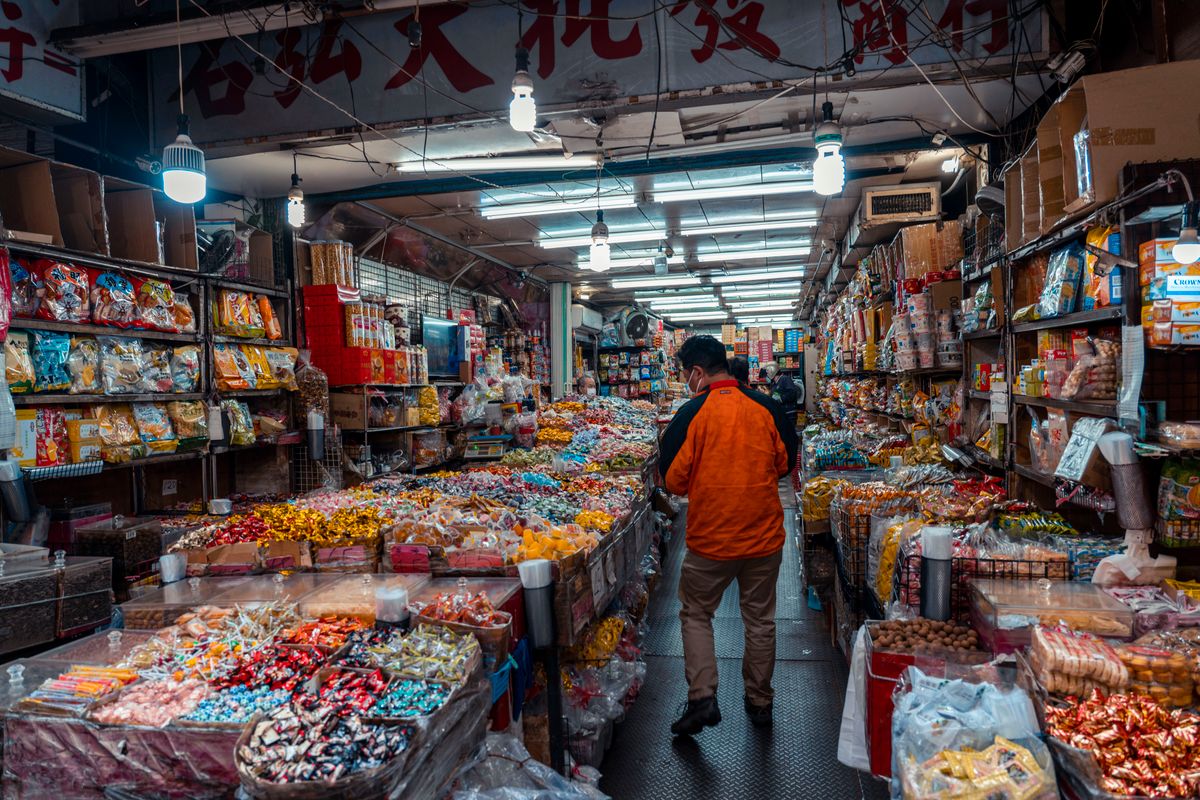
Taking it home: the rules that matter
These are descriptions, not legal advice and not clause numbers — regulations change, so check your airline and your destination's current page before you fly. What follows is what the primary sources themselves say (F104).
| What you bought | On the plane | At the border |
|---|---|---|
| Sesame paste, soup mixes, sauces, honey | Checked baggage, not hand luggage. Liquids, sauces and pastes beyond the small-container allowance must go in hold baggage; official guidance also advises against packing breakables without protection. | Declare food, and in the US declare anything containing meat or soup stock. |
| Carved wood, lacquerware, anything wooden | Pack against breakage; sharp tools such as carving knives are not hand-luggage items. | Australia asks arriving passengers to declare wooden articles and other plant material. Declaring is not itself a penalty. |
| Packaged snacks, dried foods, tea, seeds | Usually straightforward, but check the food rules of the destination. | Declare animal and plant products; commercial packaging does not automatically exempt them. |
| Bronze or lacquer replicas of artefacts | Neither sharp nor liquid, but fragile. | Post-1949 replicas may leave in reasonable personal quantities; keep a proper receipt and obtain the replica certificate if asked. Never rely on a note saying "copy". |
| Alcohol | Not in hand luggage; checked only in retail packaging with clear labelling and volume limits. | Subject to the destination's allowance. |
Primary sources: CAAC air-travel guidance · China Customs on replicas · China Customs on the declaration channel · US CBP on agricultural products · Australian DAFF on food and wooden articles. We link them rather than paraphrasing clause numbers that may have been superseded.
Where people go wrong
"Intangible heritage" as a sticker
An official consumer alert tells buyers to check the producer's name, address, production date and shelf life, and warns against unlabelled and copycat goods. A craft label on a stall is not a certificate.
Read the consumer alertBuying nationwide products as local discoveries
Packaged noodles, vacuum-packed fish and popular snack brands are available far outside Wuhan. Vacuum-packed fish is also a very different thing from the dish.
Not rareAssuming the museum sells online
The museum says it has no official online store. Third-party shops using a similar name are partners, not the museum's own channel.
Stated by the museumTrusting a price you read on a travel site
The museum's own catalogue shows no figures, and the prices we did find were seasonal press quotes or short-lived promotions. We publish none of them.
Ask in the shop
The honest weak spot on this page is that nobody in the English-speaking travel world is discussing Wuhan souvenirs at all, so there is no outside check on our judgement — only the registers. Those registers confirm that a craft exists and where it is protected; they say nothing about which object in which shop is worth your money. We publish no prices, endorse no store and name no brand as "best". Border and aviation rules also move: the sources here date from different years and should be re-checked before you fly. Class B: review the museum notice, the local standard and the customs links quarterly.
If your real interest is the streets rather than the objects, the See and do page covers the concession-era buildings and Jianghan Road, and the breakfast page explains the food you will see being packed up. For the museum, read the booking guide before you go — the shop is inside, and the visit needs planning.
Questions we keep seeing
What is the most genuinely local souvenir from Wuhan?
Can I buy Hubei Provincial Museum products online?
Which souvenirs cause trouble at the airport?
Do I need to declare food souvenirs when I get home?
Why are there no prices on this page?
Is Chu-style lacquerware a Wuhan speciality?
Sources, prices and currency
All heritage register numbers, batch years, the time-honoured-brand notice and the Wuhan Gifts local standard follow FACTS F102. The museum's two self-operated shops and its explicit 'no official online store' statement are F103. Aviation, customs and destination-country declaration rules are F104; we describe rules and link to the primary pages rather than quoting clause numbers or publishing a price. The absence of English-language discussion and the official consumer alerts are F105. All outbound links live in data/reference-links.json. The three photographs are licensed Pexels editorial images listed in data/image-credits.json; none shows a product recommended here, and the embroidery close-up is explicitly not Han embroidery. Class B: re-check the museum notice, the local standard and the border-rule links quarterly. See the source method.
Every CNY amount on this page is shown twice: the yuan figure you will actually see on the price board, and a US dollar conversion for budgeting. Dollar values are mid-market conversions at 1 CNY = $0.14957 (ExchangeRate-API (open.er-api.com), 12 Nov 2026), refreshed automatically when the page loads and cached for 24 hours. Your bank or card issuer will use its own rate and may add a foreign-transaction fee. Full explanation.
Checked quarterly — hours, routes and venues. This page was last checked 2026-11.