The city / Jianghu, in three acts
Jianghu.
A history at street level
In Chinese, jianghu (江湖) means rivers and lakes — and also the loud, self-made world that lives outside official halls. Wuhan is the one great Chinese city where the word is literally true: two rivers cut it into three towns, a hundred-odd lakes dot the map, and everything it does best happens at street level.
Wuhan's history is best told as one word: jianghu (江湖) — rivers and lakes in the literal sense, and in the figurative sense the world of the docks and the street rather than the palace. The water came first: a Shang-dynasty city stood here 3,500 years ago and the Chu culture to its south gave the region its romantic, phoenix-and-shaman streak. The docks came second: opened as a treaty port in 1861, Hankou industrialised under Zhang Zhidong, fired the 1911 uprising that ended imperial China, and merged into one city named Wuhan in 1927. The street is what you can still join: a breakfast ritual written down in 1850, a literature of the docks, and a punk scene that earned the city the nickname 'birthplace of China's punk'. This page is the long story; the practical pages tell you where to stand in it.
Other Chinese cities sell monuments: a wall, a palace, an army of clay. Wuhan's past is not kept behind glass in one quarter — it is spread along the rivers, in a customs house turned museum, an uprising's Red Building, a breakfast queue, a basement rock venue. This page tells that story in three acts, and each act ends where you can go and stand in it. Historical facts here are Class C: common history cross-checked against official and academic sources in the project's fact ledger, not a scholar's monograph.
Jianghu 江湖 is two characters: rivers, lakes. But for as long as it has been written, it has also meant the world that happens outside court and office — the world of travellers, traders, storytellers and fighters, bound by loyalty rather than rank. In most Chinese cities the word is pure metaphor. In Wuhan it is also a map. Two great rivers divide the city into three towns, the lakes are counted in the dozens, and the city's manners — direct, loud, quick to laugh, slow to be bossed — are the manners of a port. Read the rest of this page as one long footnote to that word.
Act I · The water: 3,500 years before the towns
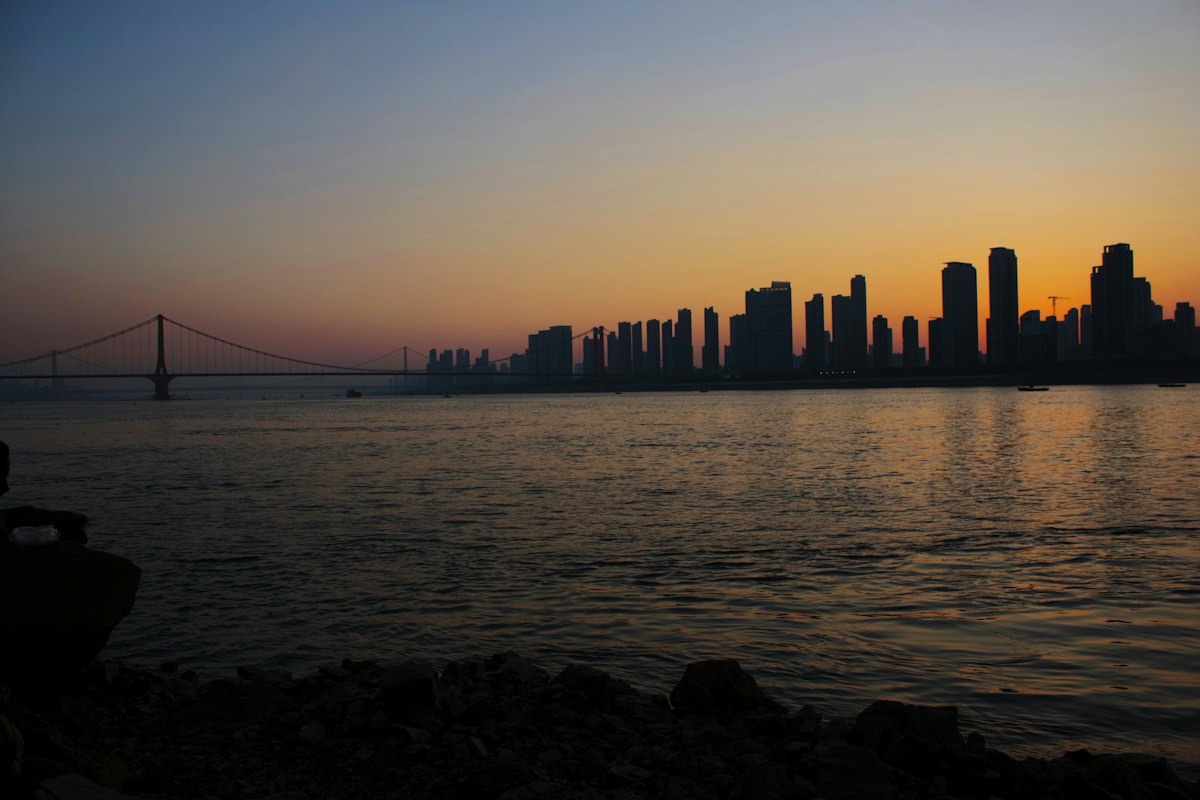
Start earlier than any town. Around 3,500 years ago, a Shang-dynasty city stood at Panlongcheng, in today's northern suburbs — the most richly preserved early-Shang site in the Yangtze basin, and the reason Wuhan is called "the root city". Its free museum sits 200 metres from a metro stop (practical details here). What it shows is that the rivers were the point from the very beginning: this was a fortress and trading post planted where the water routes met.
The region then spent a millennium inside the orbit of Chu, the great southern state of the Zhou era — the source of the phrase bìlù lánlǚ (筚路蓝缕, "hitching a firewood cart through the brambles"), which Chinese still uses for building something from nothing. Chu culture is the romantic, southern pole of Chinese civilisation: it honoured the phoenix rather than the northern dragon, kept its shamans and river-songs, and produced the Chu Ci, the Songs of Chu, the fountainhead of Chinese romantic poetry. A necessary correction for the careful traveller: Chu's capital Ying was at today's Jingzhou, not Wuhan — Hubei is Chu's heartland, but the museums, not a city wall, are what you visit. The best of it is in the Hubei Provincial Museum: the bronzes, lacquers and bells that carry the story.
Two more water-borne stories belong to this act. In Hanyang, legend sets the meeting of Boya the zither player and Ziqi the woodcutter — the origin of 知音, zhiyin, "the one who truly hears your music", Chinese shorthand for a true friend. The story is ancient legend rather than archaeology, but its echo is verifiably modern: the guqin piece Liu Shui ("Flowing Water"), tied to that legend, rode the 1977 Voyager Golden Record out of the solar system — one of humanity's greeting cards, and it is a Wuhan story. And in 223 AD, a military watchtower went up on the Wuchang bank at the order of the Wu kingdom: the first Yellow Crane Tower. The poets made it immortal — Cui Hao's Tang-dynasty poem is still ranked among the greatest seven-character lyrics in the language, and Li Bai gave the city its nickname "River City" — but the tower itself burned and burned again through the dynasties. The one you will climb was completed in 1985, the ninth rebuild, moved a kilometre from its original site when the 1957 bridge took the old footing. It is a faithful modern reconstruction of a Qing-era design — glorious to look at, honest to describe. Visiting details.
Panlongcheng dating and status (F43); zhiyin legend and the 2025-12 4A rating of the wider Zhiyin cultural tourism area — not the Guqin Terrace on its own, which the district's 2026 register lists as 3A (F45, F118, F122d); Voyager's Golden Record track list includes the guqin piece "Flowing Water" (F49); Yellow Crane Tower's 223 origin, 1884 fire and 1985 reconstruction are verified against the tower's own history pages (F23); Chu cultural framing follows the provincial museum's own narrative (F48). The zhiyin tale is legend, and is labelled as such.
Act II · The docks: how a river town made modern China
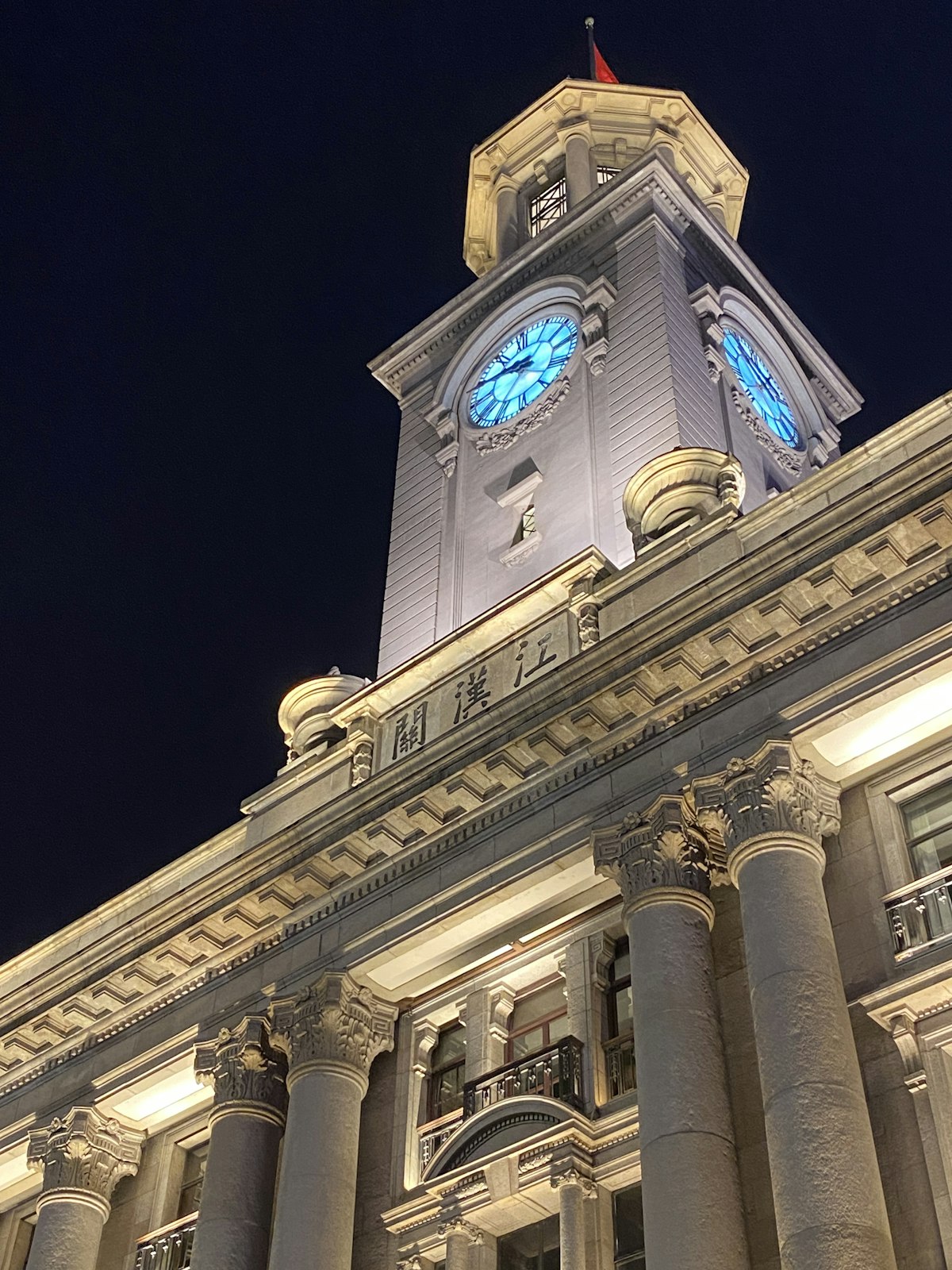
By 1800 Hankou was already one of the four great marts of China — a port where the Yangtze traffic met the Han River traffic, its waterfront famously dense with masts. In 1861, after the Second Opium War, it was opened as a treaty port, and five nations built concessions along a stretch of riverbank you can still walk: Britain, Russia, France, Germany, Japan. A century of brick survives there — the customs house of 1924, now a free museum, is the anchor. In the late nineteenth century Hankou was one of the world's great tea ports; Russian tea merchants ran brick-tea factories here, and the caravan route their bricks travelled is now marketed as the "Ten Thousand Li Tea Road".
Then the state arrived. From 1889 to 1907 the governor-general Zhang Zhidong ran his industrial experiment from this city: the Hanyang Iron Works, China's first modern steel plant; arsenals making the "Hanyang 88" rifle that would fight through two wars; new schools, new colleges, new railways. Foreign writers of the era called Hankou "the Chicago of the East" — a quote about scale and motion, not an endorsement, but it explains the confidence of the streets. And the ideas travelled with the industry. On 10 October 1911, mutinying soldiers in Wuchang fired the shots that began the revolution which ended two thousand years of imperial rule; the Red Building where the military government sat is now the 1911 revolution museum, free and a short walk from the tower hill. In 1927 the three towns were merged into a single city that took a new name for a new era: Wuhan — "Wuchang + Hankou + Hanyang" — and in the same year the city took back the British concession, one of the first times a Chinese city rolled back a foreign enclave. In 1938 Wuhan was the wartime capital-in-all-but-name, the staging ground of the largest battle of the early war with Japan — foreign correspondents and poets (Auden and Isherwood among them) filed from Hankou — and in 1957 the First Yangtze Bridge made the three towns one machine, the first bridge across the middle Yangtze, with the railway running over its back.
The docks never really retired. The same junction logic that put sail barges here in 1850 now puts this city within about four hours by rail of most of China's major cities — Chinese shorthand for the position is jiushengtongqu, which CNN Travel once rendered as "the main thoroughfare of nine provinces", a description that has stayed accurate through every change of vehicle. The practical consequences of that are on the train stations page and the visa-free transit page.
1861 treaty port, five concessions, the 1924 customs house (F25, F51); Zhang Zhidong's 1889–1907 governorship and industrialisation, and the "Chicago of the East" epithet treated as a historical quotation (F46); 1911-10-10 uprising and the Red Building museum (F20); 1927 merger and naming, and the same year's recovery of the British concession (F52); 1938 wartime role and foreign correspondents (F55); 1957 First Bridge (F25); "four hours" rail reach is a municipal-government briefing figure, approximate (F59); the "thoroughfare of nine provinces" rendering is CNN Travel's (F60d).
Act III · The street: the jianghu you can still join
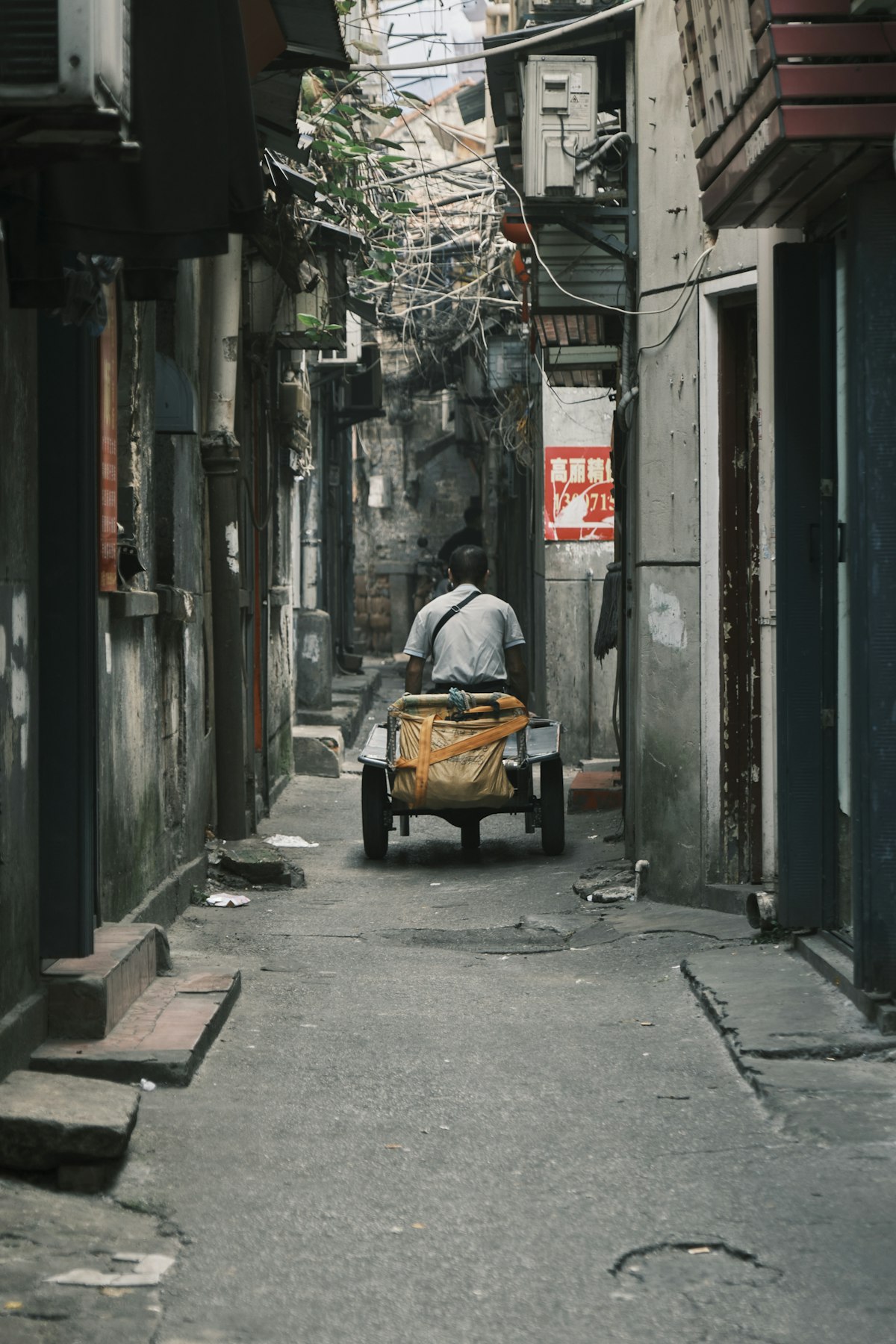
The third act is not behind glass. It is the one with a schedule.
The morning half is guòzǎo (过早), "doing breakfast" — a meal so institutional that a local poet recorded it in verse in 1850: "Breakfast, midday meal, and dinner too — and still keep your mind on supper at night." That couplet, from Ye Diaoyuan's Hankou Bamboo-Branch Songs, is the earliest written trace of the city's two-end street-food day: breakfast at dawn, xiaoye (消夜, the late supper) after dark, both eaten standing at street stalls. 175 years later both halves still run — the breakfast guide is one of the deepest pages on this site, and the supper streets are on the night page. The port bequeathed more than a menu: the docks' labour culture — casual crews, loyalty to your own, no patience for ceremony — is the personality locals and writers alike call jianghu qi, the rivers-and-lakes temperament. The novelist Fang Fang, the city's finest chronicler, uses exactly that phrase for it.
Which is why the city's literature reads like a dockside and its rock music sounds like one. Chinese critics call the fiction of Fang Fang and Chi Li "Hankou-flavour" writing: ferry crossings, shared tenement stairs, supper streets — the city itself is the protagonist (the book list below sorts out what is readable in English). And since the mid-1990s Wuhan has been called, only half-jokingly, China's punk city — foreign reporters kept reaching for the same words. A wire report put it plainly: "Wuhan is arguably China's punk capital, its historically feisty reputation reflected in the writhing mosh pits and live venues of a vibrant music scene" (AFP, 2020); an Australian broadcaster went as far as "the birthplace of China's punk music scene" (ABC, 2021); and the Wu Wei of the first band, quoted in the Guardian, states the founding fact himself: "Wuhan and Beijing were the first cities in China to have punk music. I founded the first punk band in Wuhan in 1996." The founding facts check out: Wuhan's first punk band, SMZB, formed in December 1996; VOX, the livehouse opened in 2005 by SMZB's founding drummer, is rated one of China's essential rock rooms and still books bands most nights in a corner of Optics Valley; the pop-rock band Dada re-formed to take third place on the 2020 season of China's Big Band TV showdown; and the math-rock band Chinese Football, formed here in 2011, has toured North America. It is the same river temperament with amplifiers. Where to see a show.
1850 Ye Diaoyuan couplet and the breakfast/supper pair (F50); dock-culture personality and Fang Fang's "jianghu qi" framing (F55, and the project's literary research file); punk-city label and quotes per AFP 2020, ABC 2021-07 (not 2020 — corrected against the original report) and Guardian 2026-10, all quoted verbatim (F54, F60a–c); SMZB 1996, VOX 2005, Dada 2020, Chinese Football 2024 North American tour (F53). No unverifiable percentages, production figures or band politics appear on this page.
Wuhan in books
The short version: English options are thin, which is a fact about the city's global profile rather than an oversight. The full reading and film list now carries eight books with publisher and catalogue links, what each one is good for, and the mistakes to avoid. Three to start with:
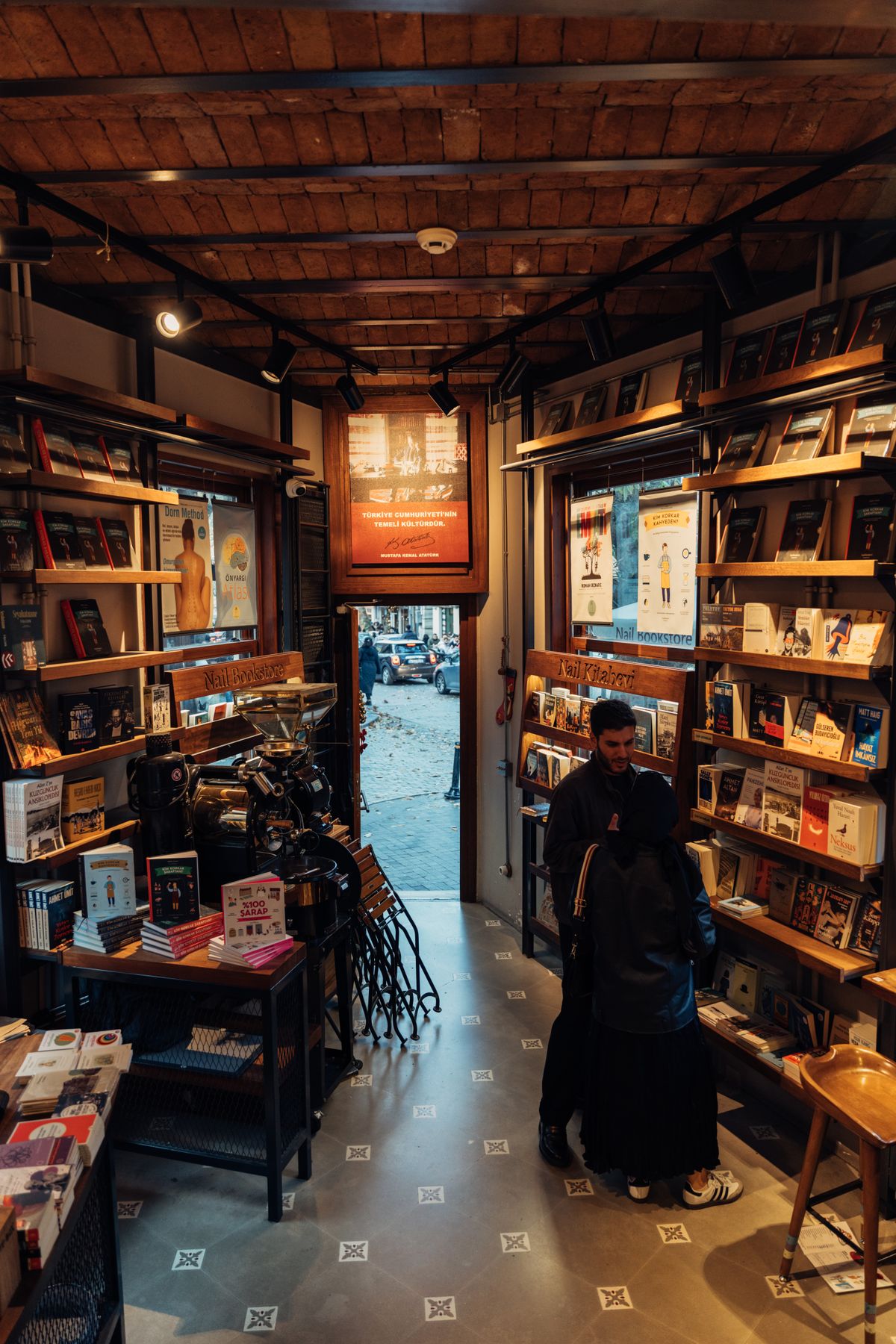
The scholar: William T. Rowe, Hankow
Commerce and Society in a Chinese City, 1796–1889 (Stanford UP, 1984) and Conflict and Community in a Chinese City, 1796–1895 (1989) are the academic standard on treaty-port Hankou. Stanford University Press
Scholarly · F94The novel: Fang Fang, The Walls of Wuchang
A 2022 translation by Olivia Milburn of her novel about the 1926 siege of Wuchang — the most purely Wuhan historical fiction available in English. Publication details
Fiction · F96The witness: Auden & Isherwood, Journey to a War
Weeks in 1938 Hankou — air raids, press conferences, interviews — in a 1939 book of poems, diary and photographs. WorldCat record
1938 · F94eRowe's second volume covers 1796–1895, not "1889–1895". Fang Fang's The Scenery was translated as Children of the Bitter River by Herbert J. Batt — Michael Berry translated the different book, Wuhan Diary. And Chi Li is not largely untranslated: her Jiqing Street novella appears in English in The Life Show and Other Stories (Long River Press, 2012). Peter Hessler's River Town is still about Fuling, not Wuhan. All the mix-ups, corrected.
Wuhan on screen
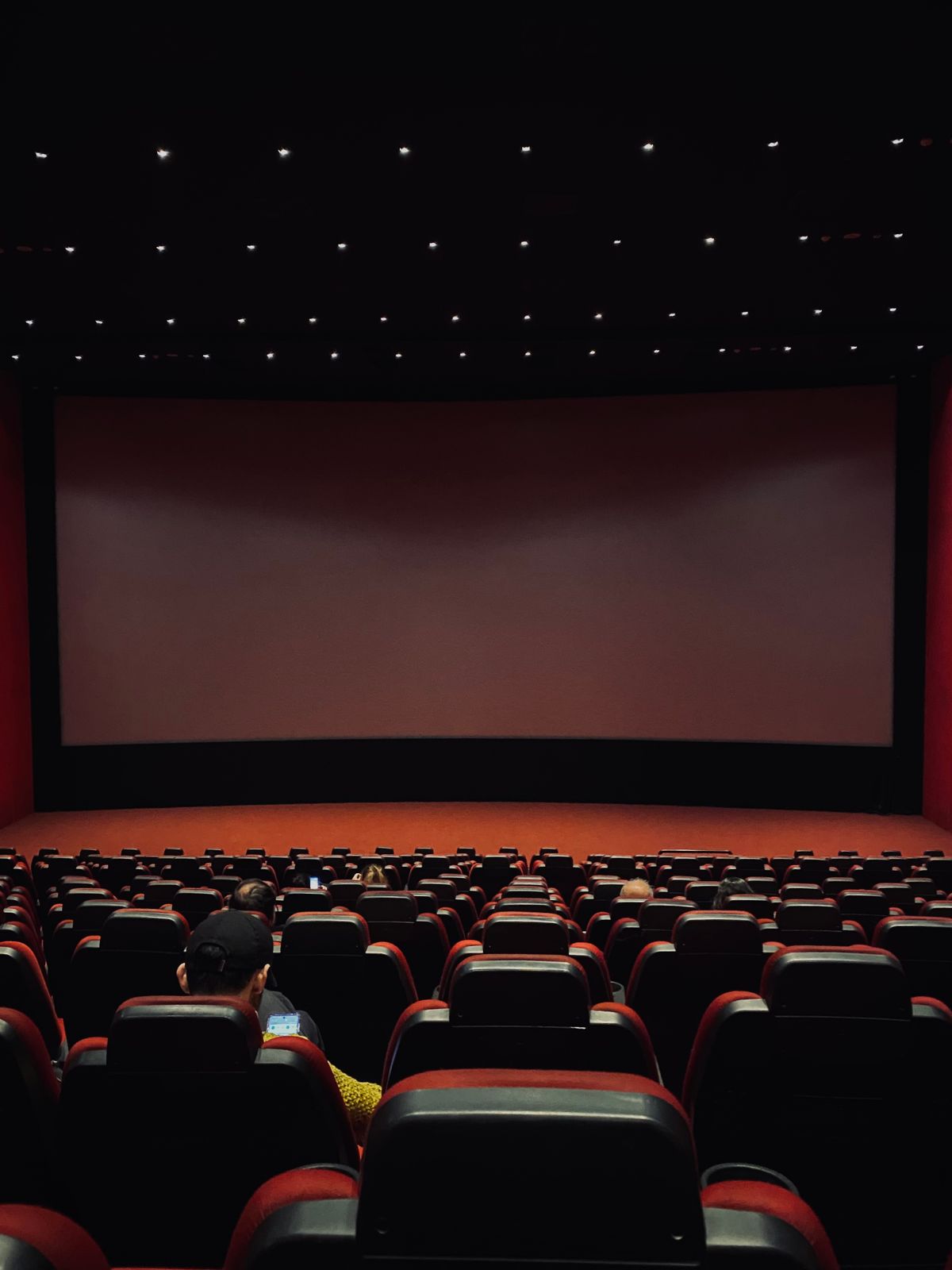
International cameras came here twice for emergencies — the 1938 war, when Joris Ivens filmed Hankou for The 400 Million, and the 2020 lockdown, when 76 Days was made inside four Wuhan hospitals. Between those peaks the everyday city barely appeared. What changed it is a small run of local films shot here in Wuhan dialect. The full list of seven films has a festival or database link for each.
Feng Shui 万箭穿心 (2012)
Wang Jing's adaptation of Fang Fang, shot in Wuhan and almost entirely in Wuhan dialect. It was the only Chinese film selected for the 2012 Tokyo competition — then the producers withdrew it. IMDb
The jianghu in one film · F95The Wild Goose Lake 南方车站的聚会 (2019)
Diao Yinan's neon-noir, shot here with Wuhan dialogue, was the only Chinese film in the 2019 Cannes competition. Festival de Cannes film page
International · F95Lighting Up the Stars 人生大事 (2022)
Liu Jiangjiang's comedy-drama set and shot in Wuhan, with Wuhan-born Zhu Yilong in dialect — the city's ordinary streets as locals walk them. IMDb
The everyday city · F95The two event films, for context
MoMA has screened Ivens's The 400 Million and holds archival material on it; 76 Days premiered at TIFF 2020 and made the Academy's documentary shortlist — not the nomination list. Official film site
Handle with context · F95bFilm facts per F95–F95b: shooting locations, dialect use, festival selection and the Academy shortlist were cross-checked against festival, Academy and filmmaker pages. Life Show (2002) is excluded from recommendations because, despite its Hankou story, its exteriors were shot in Chongqing. Two statements on this page were corrected in November 2026: Ivens's film is no longer described as part of MoMA's collection, and 76 Days is shortlisted rather than nominated.
Where this story touches your itinerary
Act I in person
Panlongcheng museum (Line 2, free, closed Mon), the provincial museum's bronzes and bells, the Guqin Terrace, the tower at dusk. One day covers it — ranked on the sights page. For what you can actually hear and join rather than just read about, the Chinese culture shortlist ranks six.
The waterAct II in person
Walk the concession riverfront from the customs-house museum to the old streets, then the Red Building. The sights page orders them; the ferry strings the banks together.
The docksAct III in person
Do breakfast at dawn (guide), supper late (guide), and a show if the calendar is kind. No museum required.
The streetIs it worth your time?
That is a separate question with an honest answer in both directions — the case for and against, including when to skip it.
The decisionQuestions we keep seeing
What does jianghu (江湖) mean?
Is Wuhan a historic city?
Was the Yellow Crane Tower rebuilt?
Why is Wuhan called China's punk city?
What books or films show real Wuhan life?
Where does the name Wuhan come from?
Sources, prices and currency
This is a narrative page at Class C: common history cross-checked across official and academic sources, with every dated claim logged in the project's FACTS.md ledger (F20, F23, F25, F43–F59) — see the research file HISTORY-CULTURE-RESEARCH.md for the per-fact sources. Deliberately excluded: tea-export percentages, factory output figures, Chu royal chronology details, and anything about band members' circumstances beyond published facts. The zhiyin story is labelled legend. The Yellow Crane Tower's 1985 reconstruction is verified (F23). No ticket prices appear on this page; practical prices live on the linked pages. The books and films sections were corrected and expanded in November 2026 (F94–F97): Rowe's second-volume dates, the translator of Children of the Bitter River, the existence of an English Chi Li collection, the Tokyo festival withdrawal, MoMA's relationship to The 400 Million and the Oscar shortlist versus nomination all follow that ledger; the full annotated list with outbound links is on the dedicated page. Two Pexels editorial photographs were added to those sections, both listed in data/image-credits.json and neither a cover, poster or film still. See the source method. Official sites for places named on this page: Yellow Crane Tower, Hubei Provincial Museum, 1911 Revolution Museum, Jianghanguan Museum, Zhiyin Hao. See the full official-site index for every venue we mention.
Every CNY amount on this page is shown twice: the yuan figure you will actually see on the price board, and a US dollar conversion for budgeting. Dollar values are mid-market conversions at 1 CNY = $0.14957 (ExchangeRate-API (open.er-api.com), 12 Nov 2026), refreshed automatically when the page loads and cached for 24 hours. Your bank or card issuer will use its own rate and may add a foreign-transaction fee. Full explanation.
Checked yearly — geography, history and background. This page was last checked 2026-11.