City / Culture you can actually experience
Yes — but mostly
you'll be watching
Wuhan does not perform its culture for visitors. There is no nightly folk show with English subtitles, no single street of old crafts, and most English guides stop at the tower and the museum. What does exist is real and often excellent — but you need to know which door to walk through, which ticket can only be bought on site, and which famous-sounding things are marketing. Here are six, ranked, plus one category we will not recommend.
Six are worth your time: the museum's replica-bell concert, the Qintai concert halls, a weekend Han or Chu opera, the Guqin Terrace, counting luohans at Guiyuan Temple, and Wuhan acrobatics. Traditional medicine is different: treatment is a medical act in China, so we describe what you can look at, not what to try.
This is not a top-ten list of "Chinese culture experiences". It is a shortlist with reasons. We asked one question of each candidate: can a first-time visitor to China actually walk into it, and is there a primary source for the claim? The answer is lopsided in an interesting way — most of what you can reliably see here is performed music, and most of the rest is a story attached to a place.
We looked. Wikivoyage's Wuhan entry mentions street performers and says nothing about the concert halls; Lonely Planet's Hubei page points to a livehouse and Wudang Mountain; Tripadvisor, Gramophone and Bachtrack turned up nothing usable, and we found no English-language depth feature on Wuhan culture in the BBC, the New York Times or the South China Morning Post. Two of the bigger commercial guides that do cover the city get basic facts wrong: China Highlights calls the provincial museum "Wuhan Provincial Museum" and still lists six Yangtze bridges; The China Journey calls Gude Temple a "AAAAA" attraction, which it is not. Chinese official sources, meanwhile, publish exactly the details a visitor needs. Most of this page is a translation of that gap (F121).
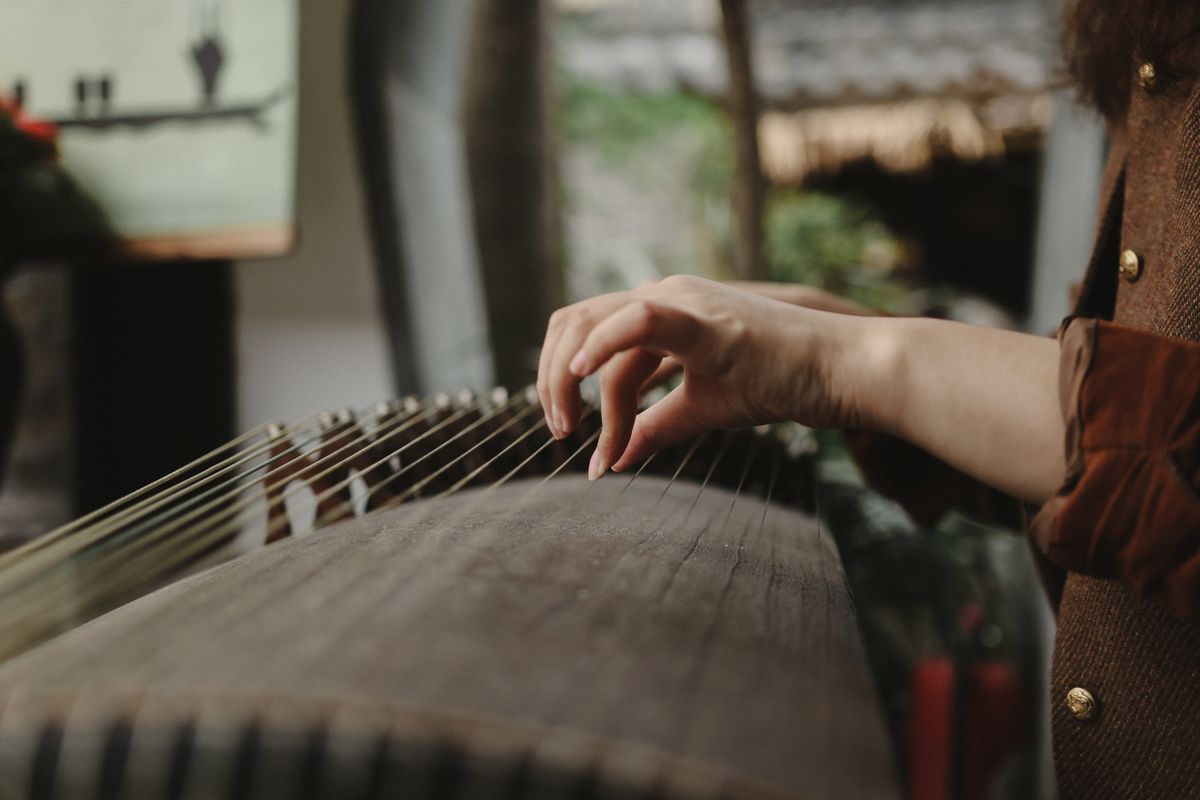
The shortlist, ranked
Six things survive the check. The ordering is ours, and it is an argument about reliability as much as beauty: a daily performance with an official source beats a legendary site whose buildings were rebuilt in living memory.
| # | What | Why it makes the cut | The catch |
|---|---|---|---|
| 1 | Replica-bell concert, Hubei Provincial Museum | The only daily traditional-music performance here with a primary source: the museum says the ensemble has played year-round since 1987, on replicas of the 2,400-year-old bells (F111). | A separate paid ticket, sold only after you arrive. Show times conflict across four official and press sources. |
| 2 | Qintai Concert Hall and the Grand Theatre | A resident orchestra since 2010, a natural-acoustic hall, and the stage where international tours land in central China (F110). | The programme is mostly Western classical and musicals, not Chinese traditional music; the website has no English version. |
| 3 | A weekend Han or Chu opera | The most local thing on this page: small theatres, low prices, an audience that is not there for tourists (F112). | Sung in dialect, advertised through Chinese WeChat accounts, and almost invisible in English. |
| 4 | The Guqin Terrace and the zhiyin story | Wuhan's single most distinctive contribution to Chinese culture — and the guqin piece tied to it went into space on the Voyager Golden Record (F118). | The buildings are post-1949 rebuilds; the 4A rating belongs to a wider tourism area, not to this 3A site. |
| 5 | Counting luohans at Guiyuan Temple | The one custom on this page you physically take part in rather than watch (F119). | It is folk custom, not documented ritual; we could not verify the temple's ticket or opening hours from a primary source. |
| 6 | Wuhan acrobatics | National heritage list, a purpose-built hall from 1992, and the provincial culture department says shows run there year-round (F120). | Tour-group oriented, and we publish no programme or price. |
Traditional medicine is deliberately absent from the ranking. It is discussed below as something to look at, for a legal reason rather than an editorial one. Every row above is supported in FACTS F110–F121; where a claim only exists in a commercial guide, it is labelled. The three take-part entries now have their own deep-dive pages — the Guqin Terrace, counting the luohans and Wuhan acrobatics.
1. Hear it: the music and the stage
If you have one cultural half-day, spend it on sound. Wuhan's strongest inherited art forms are musical — bells, zithers, opera — and, unusually, several of them are still performed rather than displayed.
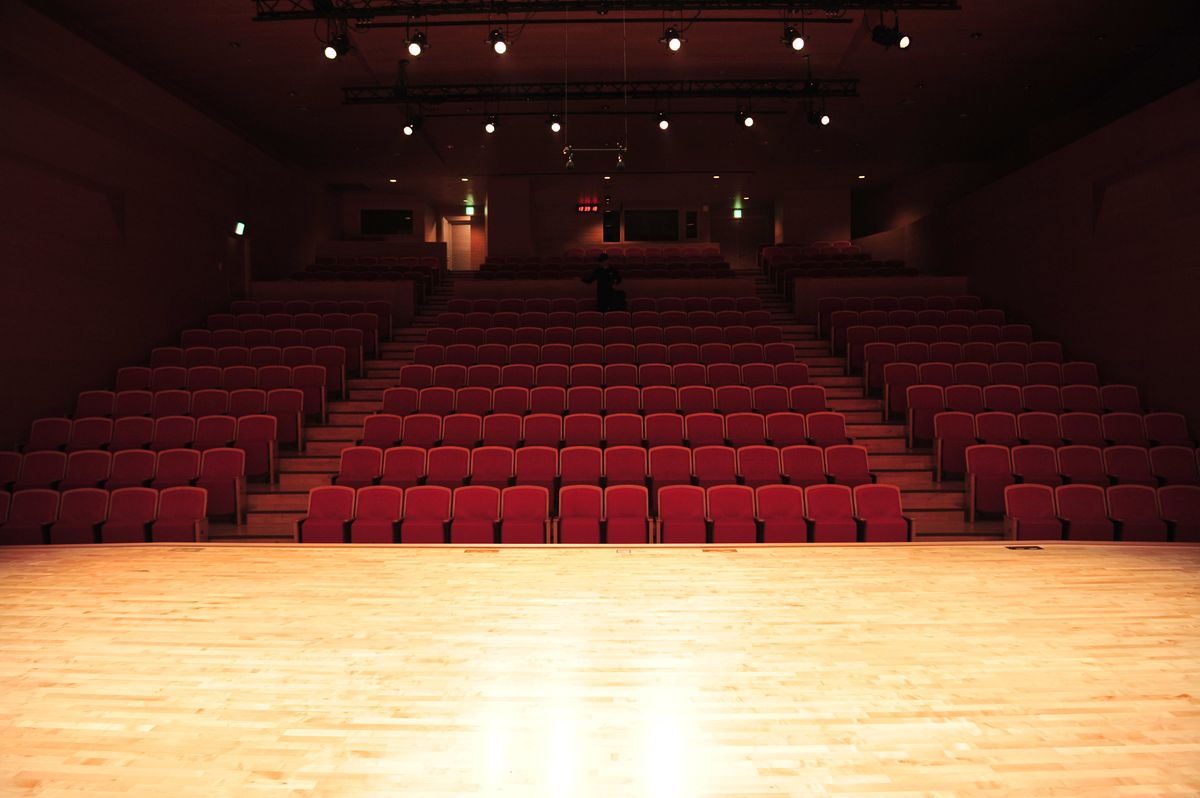
Start with the bells, not the concert hall
The Hubei Provincial Museum is free, but the bell concert is not included. The museum lists it as a chargeable service: $7.48¥50 — Official / verified figure. for adults and $4.49¥30 — Official / verified figure. for eligible concessions. You reserve your free admission first, then buy the performance ticket on site, at the machine or desk outside the hall. It cannot be booked in advance (the museum's services page).
What you hear is a replica set, and that is the honest answer: the originals were excavated in 1978, a full copy was successfully made in 1984, and the museum's chime-bell orchestra was formally founded in 1987. The museum's own English page says the ensemble has maintained a year-round resident performance ever since, and Hubei's provincial English site confirms the instruments are replicas. For a visitor this is the rare case where "reproduction" costs you nothing: the point is hearing why one bell can produce two tones, not standing near a bronze antiquity. The museum's programme notes are bilingual; that is not the same as subtitles (F111).
The Qintai halls
Across the river in Hanyang, two buildings sit beside Moon Lake facing the Guqin Terrace. The Grand Theatre opened in September 2007 under a government-authorised Poly management company; the Concert Hall followed in September 2009 with the China Philharmonic giving the opening concert. The district government describes the pair as "flowing water, knowing the music" answering "high mountains, loud song" — an architectural reply to the zhiyin legend across the water. The hall is a shoebox design built for natural, unamplified sound, with a resident orchestra, the Wuhan Philharmonic, since July 2010. The theatre is where the international tours land — the London Symphony, the Berlin Philharmonic, Zubin Mehta, even an English-language Dream of the Red Chamber from San Francisco Opera (F110).
The catch is in the programme. These are China's best-equipped stages for Western classical music and touring musicals; Chinese traditional repertoire is one strand among several, not the house style. The annual "Open the Door to Art" summer festival is a publicly subsidised, low-priced series with an official municipal source, but specific concerts, artists and dates are one-off programming. Check the hall's own current programme — it is Chinese-only, with no English switch. An official English venue directory exists for addresses and phone numbers if you need to book by phone.
Han opera and Chu opera, in small rooms
This is the layer English-language travel writing has entirely missed. Han opera entered the first national heritage list in 2006; a Wuhan city ordinance for its protection took effect on 1 June 2026, and the province is down to two professional Han opera companies. The regular performances are not at the big theatres. They happen on weekend afternoons in the companies' own small halls: Wuhan People's Theatre for Han opera, Yongfang Ancient Theatre near Tanhualin for Chu opera, and Chule Xiyuan for the Wuhan Chu opera company's "weekly show" season. The provincial heritage register lists the forms; the weekend programme is published through Chinese WeChat accounts and ticketing apps (F112, F108).
Go for the room, not for comprehension. The singing is in dialect or stage speech, there is no reliable English subtitle arrangement for these weekend shows, and the printed programme is Chinese. The city's "every day" performance policy and the festival appearances of opera at the Yellow Crane Tower are policy-driven or seasonal — do not plan a Tuesday around them. If dialect and language are what interest you, our four-song dialect guide explains why "Wuhan opera" is a misleading phrase.
The show everyone books instead
The Zhiyin Hao is an immersive theatre piece staged on a Yangtze riverboat, first performed in 2017. Wuhan's own English city page gives the timings, the boat's capacity and the pier. It is a commercial drama, not a concert or an opera, and a 2019 English report described it as delivered entirely in Chinese. Its operator also announces seasonal suspensions and reopenings, so "every night except Monday" is not a promise we will repeat (F113). If you want the real river at night, the public ferry is cheaper and needs no booking.
We found four different official or press schedules for the museum's bell performances alone, and the Qintai halls, the opera companies and the riverboat all publish one-off seasonal programmes. We also could not verify whether a foreign mobile number can register on the ticketing platforms, or whether an overseas card works at the box office. Printing a confident date or price here would be worse than printing none. Check the venue's own current notice the day before, and read how we label a figure (F111, F113).
2. See it, don't do it: traditional medicine
This handbook does not give medical advice. We are not a clinic, we do not recommend any treatment, practitioner or product, we describe no effects and we quote no treatment prices. In China, acupuncture, pulse diagnosis, prescribing and similar acts are medical services: national rules forbid non-medical wellness businesses from performing them or advertising a therapeutic effect, and advertising law forbids non-medical publishers from making treatment claims (F116). If you are unwell, see a licensed hospital — the emergency and medical page is the right stop.
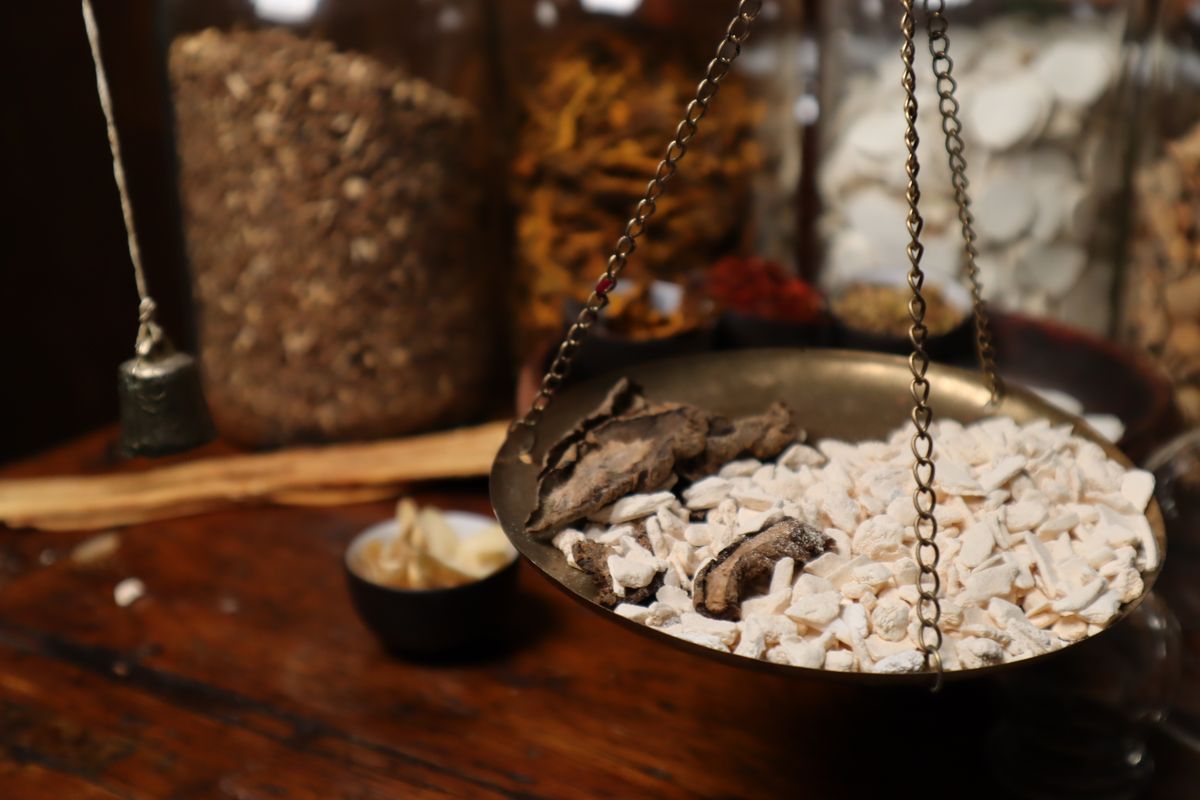
What you can actually look at
The name to know is Yekaitai. A herbal medicine shop was opened on Hankou's Dajia Street in 1637 — the date used by the Ministry of Commerce's time-honoured brand register, the Wuhan commerce bureau and the local press. It is called one of China's "four great medicine houses" alongside Tongrentang, Huqingyutang and Chenliji; that is a trade and local-history reputation, not an official ranking, and the phrase traces back to an oral-history essay from 1980. The brand entered the Ministry of Commerce's second batch of China Time-honoured Brands in 2011 (the ministry's brand register, F114).
The visitor-facing site is on Parrot Avenue in Hanyang: the Ministry of Commerce records that the Jianmin pharmaceutical group built a "front shop, back workshop" culture block inside its own factory site, with a herb garden, a memorial hall and a museum. Two honest complications. The brand name is disputed — the ministry's register attaches "Yekaitai" to a pharmacy chain, while the culture block was built by the group holding the "Jianmin" heritage brand, and a 2023 report describes a trademark and false-advertising dispute. And the museum's opening arrangements contradict each other across four sources: free-all-day, weekends-only, and "free during the herbal-paste festival" all appear. We therefore do not say it is free, open daily, or open at any particular hour; check with the venue before crossing the river for it (F114).
The other genuinely non-clinical option is the herbal specimen hall at Hubei University of Chinese Medicine, built in 1984 with several hundred displayed specimens. Its own page routes public visits through a Chinese WeChat account's museum-booking programme; we could not verify whether an individual overseas visitor can register, so treat it as "possible with Chinese-language help", not as a walk-in. The Tanhualin lanes nearby sell herb-infused teas, sachets and stationery — cultural objects, not treatments. Note also that Huqingyutang's famous medicine museum is in Hangzhou, not Wuhan, and its Wuhan counters and the Tongrentang outlets here are retail or clinic premises, not exhibitions (F115).
The catch, and it is a serious one
You will sometimes read that the World Health Organization "recognises" traditional Chinese medicine because it added a traditional-medicine chapter to ICD-11. That is not what happened. The classification was adopted in May 2019 and took effect on 1 January 2022 as a supplementary chapter for optional dual coding, not used for mortality statistics. WHO's own FAQ says the chapter is "neither judging nor endorsing the scientific validity of any Traditional Medicine practice or the efficacy of any Traditional Medicine intervention"; its stated purpose is to make research and evaluation possible (WHO's ICD page). A 2019 Nature editorial argued the opposite case — that inclusion risked legitimising an unfounded philosophy — and quoted WHO saying the categories endorse no form of treatment.
The US National Center for Complementary and Integrative Health is blunter about the evidence: results for Chinese herbal products are mixed, many studies are of poor quality so no firm conclusions can be drawn, some trials find real and sham acupuncture equivalent, and contaminated or misidentified herbal products have caused organ injury. Its clearest line is not to use traditional medicine to replace or delay conventional care. We are a travel handbook; we have no standing to argue with any of that, and we would rather give you the primary sources than a reassuring sentence (F116).
If you are carrying anything home
Medicinal materials have rules that ordinary food gifts do not. Chinese customs limits personal carriage of Chinese medicinal materials and patent medicines to reasonable quantities for personal use, and materials containing musk, toad venom, tiger bone, rhino horn or bezoar are prohibited from export (customs guidance). Decoctions are liquids: China's aviation baggage guidance puts them under the 100 ml / 1 litre rule on international flights, and whether a medicinal decoction qualifies for the "essential liquid medicine" exception is not something we could verify — check with your airline and pack it in hold luggage. On arrival, US Customs lists "traditional medicines" among restricted souvenirs and requires declaration of animal and plant products including soups and soup products; Australia's biosecurity factsheet names ganoderma and cordyceps preparations specifically. Declaring honestly does not itself attract a penalty. The souvenir page covers food, wood and replicas; this is the additional, medicine-specific layer (F117, F104).
3. Take part: three things you can join
Count the luohans at Guiyuan Temple
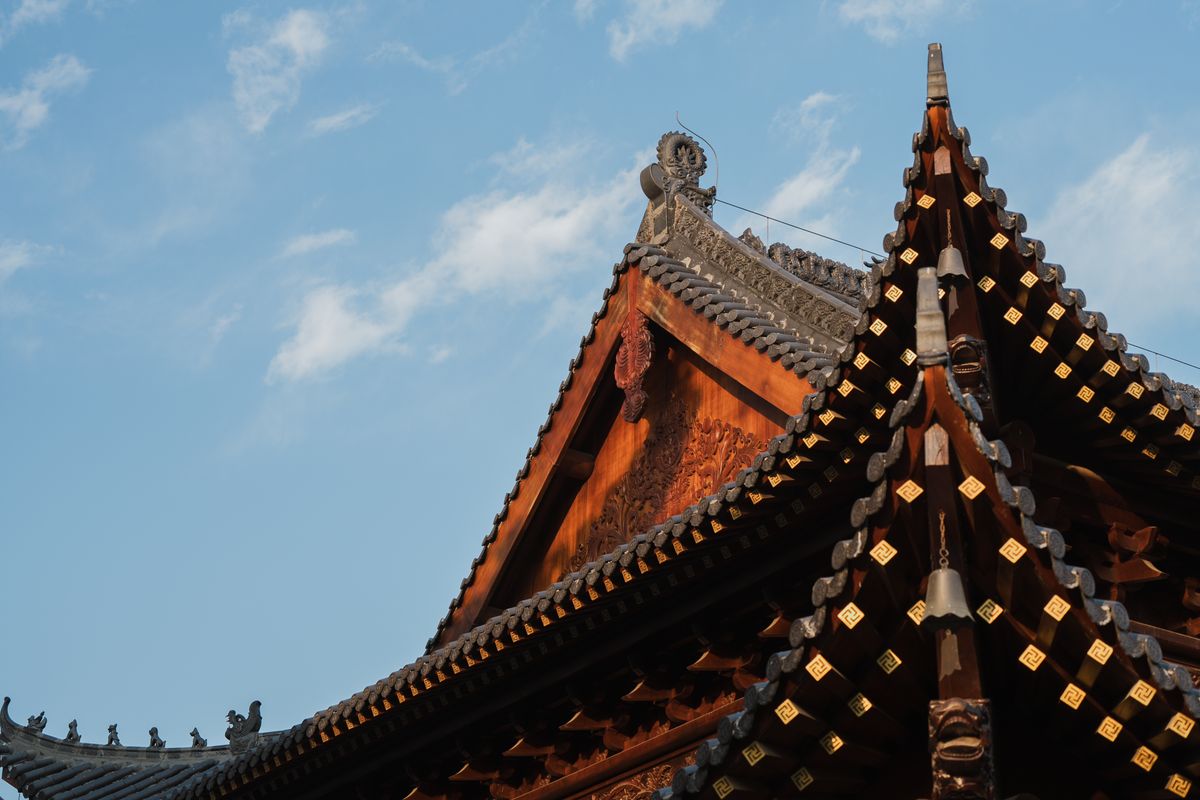
Guiyuan Buddhist Temple was founded in 1658 and is listed by the Hanyang district government as a national key Buddhist temple and a 4A attraction. The custom is simple and slightly absurd in the best way: starting from any of the arhat statues, count along the rows up to your age, and the expression on the one you land on is read as a comment on your coming year. One English commercial guide is the only source we found that spells the whole procedure out, and we found no folkloric or academic primary source for it — so file it as local custom, said to, not as doctrine or history. The temple's ticket price and opening hours circulate on booking sites but we could not confirm them on a temple or government page, so we do not print them. Worth an hour; not worth crossing the river twice (F119).
Go to the place where the metaphor comes from
Zhiyin — "the one who truly hears your music" — is Chinese shorthand for a friend who understands you completely, and the legend of the zither player Boya and the woodcutter Ziqi is set here in Hanyang. The history page tells the story. What it does not say is that the Wuhan Federation of Trade Unions reports daily guqin performances in the terrace's qin hall, including Liu Shui ("Flowing Water"), plus seasonal gatherings at the solstices and the autumn culture week. The same piece, performed by Guan Pinghu, is the Chinese track on Voyager's Golden Record; guqin art was proclaimed a UNESCO masterpiece in 2003. A Wuhan legend, a piece of music, and a spacecraft — that is the single best cultural story this city owns (F118, F49).
The catch: the buildings are not ancient. The terrace complex was rebuilt after 1949 and refurbished in 2024; the "Guqin Terrace" calligraphy is attributed to the Song calligrapher Mi Fu. The district's 2026 attraction register grades the terrace 3A — the 4A rating you may see belongs to the wider Zhiyin cultural tourism area that strings the terrace, Qingchuan Pavilion, Guishan and Moon Lake together. And the signage is unreliable: Wuhan's 2012 English-signage guide was, by its drafter's own account, written in a week, and reporting at the time found the terrace rendered as "Boya Terrace" on site. Bring the Chinese characters, not a translated map (F118, F122d).
Wuhan acrobatics
The least-covered, most bookable item on this list. Wuhan acrobatics entered the fourth national heritage list in December 2014; the troupe dates to 1953; and the provincial culture department describes the 1992 Wuhan Acrobatics Hall as the country's first venue built specifically for international circus, adding that acrobatics productions are staged there year-round. That "year-round" is an unusually strong official claim — the strongest of any performance on this page. It is also the one most likely to be sold to tour groups, so check the current programme rather than assuming a nightly show (F120).
The living, unscheduled version
At dawn on the Hankou riverfront people practise taiji, and in July the city's 7·16 Yangtze crossing swim draws winter swimmers and rescue crews; East Lake runs a Dragon Boat festival programme and Qingchuan Pavilion holds poetry and mid-autumn events (the pavilion's own event history). Chinese press coverage of all of this is plentiful. None of it is a timetable. These are press reports, sports-bureau features and festival notices, not a promise that something happens every morning. Go early if you are up early, and enjoy it as a bonus rather than an itinerary item (F121).
What we left out, and why
Baotong Temple, Changchun Temple, Gude Temple
Architecturally interesting, especially Gude Temple's hybrid early-twentieth-century design. But we found no government first-hand page, no confirmed English guiding, and even two competing street addresses. They belong in a "if you are passing" line, not a recommendation.
Thin primary sourcesQingchuan Pavilion and the Hanyang tree
The poem's geography has shifted: the original Parrot Isle sank centuries ago and today's island was renamed in 1815; the pavilion is a 1980s reconstruction. That is a good "names versus things" note for the history page, not a heritage claim.
Rebuilt, not ancientTeahouses, square dancing, paper cuts, dough figures
Delightful when you stumble on them, but we found no primary source for a visitor being able to join any of them on a normal day. Most appear only at festival markets. We refuse to put "watch the locals" in a must-do list.
No reliable scheduleNames, dates and prices of individual shows
Visiting orchestras, a musical's run, an opera company's weekend bill, a boat's seasonal reopening — all one-off programming. We link to the places that publish them instead of freezing a date that will be wrong by the time you read it.
Changes monthlyThe practical bit nobody writes down
- Reserve the museum, then buy the bell ticket. Free entry is a real-name reservation with your passport; the concert ticket is a separate on-site purchase. Alipay and WeChat Pay are the museum's stated payment methods (official services page, F111).
- Assume Chinese at the box office. The concert hall's site has no English version. The museum has bilingual signage and bilingual programme notes; the opera houses and the acrobatics hall have no verified English subtitle or signage arrangement. An English-language museum guide exists but must be booked by phone in advance.
- Bring the Chinese characters of the place name. Wuhan's own English-signage guidance was drafted in a week and produced mistranslations still visible at the Guqin Terrace. A screenshot of the Chinese name is worth more than a translated map.
- Do not rely on one "official-looking" English guide. Two of the largest get the museum's name, the bridge count and a temple's grading wrong. Where this page links to a Chinese government source, that is deliberate: it is the closest thing to a primary source that exists for these venues (F121).
The honest answer to "what Chinese culture is there in Wuhan?" is plenty, but almost none of it is packaged for you. The English-language category barely exists: no guide we found tells you which small theatre shows Han opera on a Sunday, that the bell concert needs an on-site ticket, that the famous terrace is a post-1949 rebuild, or that a WHO classification is not an endorsement of a treatment. Everything reliable here came from Chinese municipal, provincial and institutional pages, checked against WHO, NCCIH and the venue's own English site. Where evidence is thin — the temple's opening hours, a foreign card at the box office, a folk custom's origin, a show's date — this page says so instead of filling the gap. Class B: venue programmes, the museum fee and the regulatory sources are re-checked quarterly.
For the stories behind the places, the three-act history; for the objects, the museum guide and the ranked sights; for the city on screen and on the page, books and films; for what is actually sung in the local dialect, the four-song guide; for crafts with verifiable register numbers and the customs rules, what to buy; and for which month to come, the season guide.
Questions we keep seeing
Is there traditional Chinese culture to experience in Wuhan, or is it just a modern city?
Can I book the bell concert or concert-hall tickets in advance with a foreign card?
Where can I see Han opera or Chu opera, and will there be English subtitles?
Can I try acupuncture, cupping or a herbal consultation as a tourist?
Is the Guqin Terrace a 4A attraction?
Why do you quote WHO and an American health agency on a travel page?
Why are there no dates, show times or most ticket prices here?
Can I bring Chinese medicinal materials home?
Sources, prices and currency
Venue facts, the resident orchestra, the museum's replica-bell ensemble and its separate on-site ticket follow FACTS F110–F113, checked 2026-11-12 against the Hanyang district government, the Hubei housing department, the Wuhan culture and tourism bureau, the Hubei Provincial Museum's Chinese and English pages, Wuhan municipal government releases and an official English venue directory. The traditional-medicine section follows F114–F117: the Ministry of Commerce brand register and culture-block notice, Hubei University of Chinese Medicine's own booking page, the State Council's wellness-service rules, Advertising Law and medical-advertising rules, WHO's ICD-11 FAQ and classification page, NCCIH, a 2019 Nature editorial, and customs, aviation, CBP and Australian biosecurity primary sources. The Guqin Terrace, Guiyuan Temple, Wuhan acrobatics and the English-language gap follow F118–F121. Two earlier errors on this site were corrected at the same time (F122): the bell concert is not included with free admission, and no fixed show times are published because four official or press schedules conflict; the 4A rating belongs to the wider Zhiyin area, not the terrace alone. We publish no individual performance dates, no treatment claims, no treatment prices and no unverified opening hours or ticketing rules; those exclusions are itemised in the discipline notes to F111, F113, F114 and F117. Outbound references are held in data/reference-links.json and the concert hall's own programme site in data/official-sites.json, both expanded at build time. The six photographs are Pexels editorial images listed in data/image-credits.json; none is a Wuhan venue, a performer portrait, a product endorsement, a cover, a poster or a performance still. Class B: re-check venue programmes, the museum performance fee, the regulatory sources and the outbound links quarterly. This page is not medical advice. See the source method.
Every CNY amount on this page is shown twice: the yuan figure you will actually see on the price board, and a US dollar conversion for budgeting. Dollar values are mid-market conversions at 1 CNY = $0.14957 (ExchangeRate-API (open.er-api.com), 12 Nov 2026), refreshed automatically when the page loads and cached for 24 hours. Your bank or card issuer will use its own rate and may add a foreign-transaction fee. Full explanation.
Checked quarterly — hours, routes and venues. This page was last checked 2026-11.