Take part / Guiyuan Temple
Counting the luohans at Guiyuan Temple
The one Chinese folk custom in Wuhan that a visitor can join outright — no tickets to a show, no language needed, just you and five hundred carved faces.
Counting the luohans at Guiyuan Temple is the one Chinese custom a visitor can join outright: pick any statue in the arhat hall, count forward by your age, and read the last statue's expression as your year ahead. The temple dates to 1658. Ticket prices and hours come only from conflicting second-tier sources, so we print neither.
Walk into the arhat hall. Choose any one of the seated luohan statues — the tradition lets you start anywhere. Count statues forward, one per year of your age, moving row by row. Stop on your count: the statue you land on — its expression, its posture, whatever it is holding — is your reading for the year. That is the whole mechanism. It is a folk game played with complete seriousness by locals, and nobody will mind a foreigner doing it.
The temple behind the game
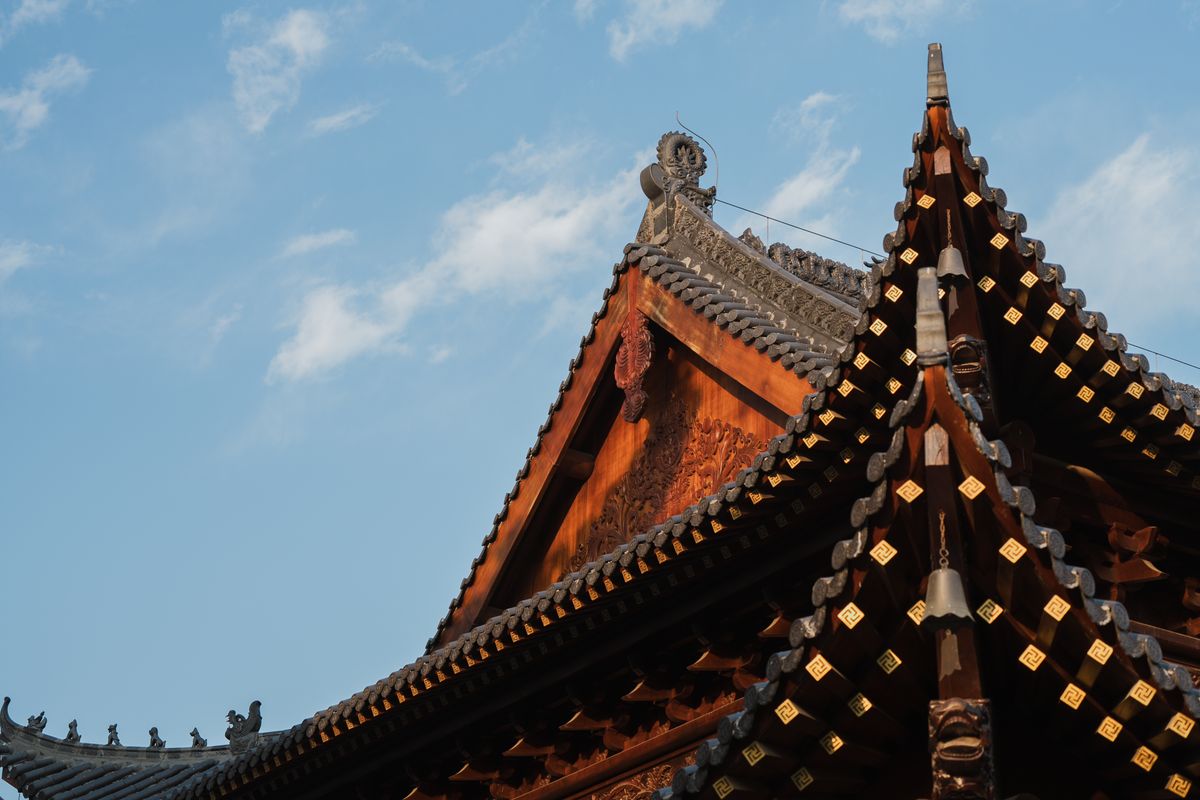
Guiyuan Chan Temple was founded in 1658, in the fifteenth year of the Shunzhi reign of the Qing dynasty (F119). It is a national key Buddhist temple and a protected heritage site, and the Hanyang district government's own register lists it as a national 4A attraction. The name means something close to "returning to the origin" — a Buddhist phrase, not a marketing slogan. The temple sits in Hanyang, the same slice of the city as the Guqin Terrace, so the two pair naturally in one afternoon (see the zhiyin page).
What the custom is — and is not
Honesty first: counting luohans is folk custom carried by practice, not documented ritual. We found no folklore-fieldwork primary source describing it, and the fullest English description anywhere is on a commercial guide site (F119). The statues themselves are the point: a long arcade of arhats, each with a distinct face and pose, built for exactly this kind of individual encounter. Locals queue for it at Spring Festival. Treat it the way you would a shrine everyone uses: quietly, and on its own terms.
Ticket figures and opening hours for Guiyuan Temple circulate on second-tier local sources only — the temple has no official ticketing page we could verify (F119). Sources disagree, so per this site's rule we publish neither. Expect a modest entry ticket, expect a timed-entry reservation through the temple's WeChat account on busy days (reported), and confirm both on arrival or through your hotel. If counting the luohans itself carries any separate charge, that too is unverified — ask at the gate.
Why this makes the cultural shortlist
Most of what this handbook calls Chinese culture in Wuhan is something you watch — bells, opera, acrobatics. This is the exception: a living custom where the visitor is not an audience but a participant, in a 350-year-old temple, for the price of a metro ride's worth of planning. English-language guides barely mention the mechanic at all; the district government's own pages do. That gap is exactly what this site exists for.
Pairing it with a day
Guiyuan Temple and the Guqin Terrace both sit in Hanyang, and both connect to the same story of the city's river-borne merchant culture. A natural half-day: temple in the morning, terrace and the Moon Lake arts quarter after lunch, then cross to Hankou's riverfront for the evening — the two-day route sketches the crossing.
Questions we keep seeing
Is it disrespectful for a foreign visitor to count the luohans?
How much is the ticket?
Do I need to book ahead?
Can I really start counting from any statue?
What do I do with the result?
Sources, prices and currency
Temple founding (1658), national status and 4A listing: Hanyang district government pages (F119, A-level). The counting custom: folk tradition, no folklore primary source; the fullest English account is a commercial guide (F119, C-level) and is labelled as such. Ticket prices, opening hours and reservation mechanics: C-level sources in conflict — deliberately not published. Class C — re-check yearly.
Every CNY amount on this page is shown twice: the yuan figure you will actually see on the price board, and a US dollar conversion for budgeting. Dollar values are mid-market conversions at 1 CNY = $0.14957 (ExchangeRate-API (open.er-api.com), 12 Nov 2026), refreshed automatically when the page loads and cached for 24 hours. Your bank or card issuer will use its own rate and may add a foreign-transaction fee. Full explanation.
Checked yearly — geography, history and background. This page was last checked 2026-11.