The city / Reading and screening list
Read the city
before you arrive
Wuhan is not well served by English-language books, and for decades it barely appeared on international screens. What does exist is unusually specific: a two-volume scholarly history of the treaty port, a handful of novels about tenement stairs and market porters, and a recent run of films shot in the city in Wuhan dialect.
For a first trip, read Fang Fang's Wuchang siege novel The Walls of Wuchang or Auden and Isherwood's 1938 Journey to a War, then watch The Wild Goose Lake (2019) or Lighting Up the Stars (2022) — all are set in Wuhan, and the films were shot here. Skip the famous titles that only borrow the city's name: River Town is about Fuling, and the 2002 film Life Show was shot in Chongqing despite its Hankou story. Every entry below links to a publisher, archive, festival or film database; we do not embed covers or posters.
This is a reading and viewing list with opinions, not a bibliography. It tells you what each work actually gives a traveller, what it gets wrong or leaves out, and where to find it. The short version lives on the jianghu history page; this is the full one. The author was born and raised in Wuhan, which is useful for judging whether a film sounds like the city — but every date, translator, publisher and festival record below is checked against a source, not memory.
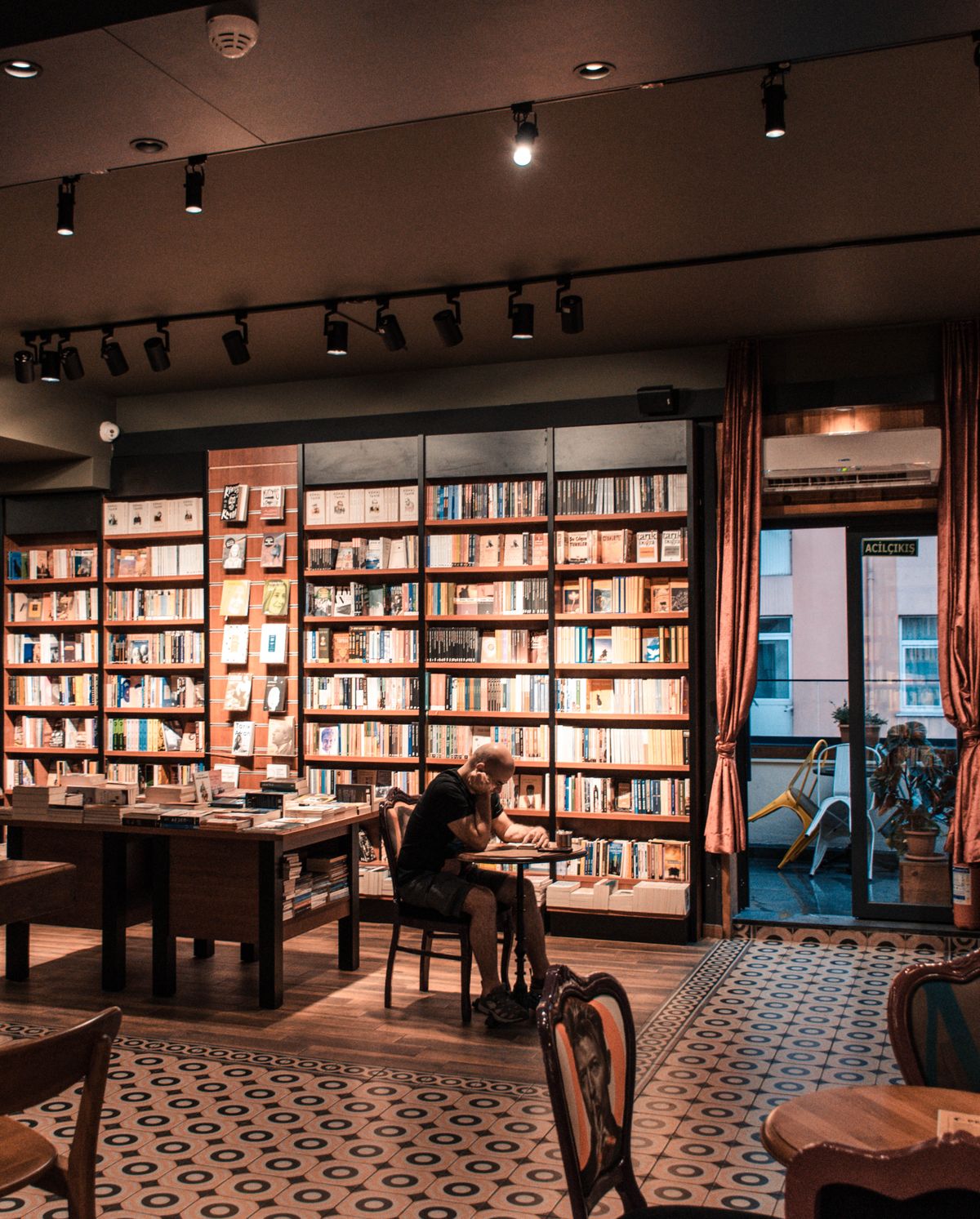
Book covers and film posters are the publisher's or the studio's artwork. An independent, non-commercial website is not automatically exempt from copyright in either China or the United States, and platform terms (Open Library Covers, TMDB) are a licence to use a service, not a grant of rights to the artwork. So we do the low-risk thing: link to the publisher, festival, archive or database where you can see the cover or poster, and use ordinary licensed photographs of bookshops and cinemas as editorial illustration (F97). No still is presented as if it came from a film.
Eight books, ranked by what a traveller gets
The Walls of Wuchang 武昌城 — Fang Fang
Start here if you read one novel. It is set during the 1926 siege of Wuchang, when the walled town was cut off and its civilians starved behind the gates. The city is not background: the walls, the Yangtze and the split between the three towns drive the plot. It gives a first-time visitor a sense of Wuchang as an old, enclosed place rather than a district of universities and the tower hill.
The catch: a war novel, not a guidebook, and its 1926 city has almost no physical trace you can visit today. Read it for the mental map, then see the modern town on foot.
Journey to a War — W. H. Auden & Christopher Isherwood
The best English eyewitness of wartime Hankou. The two writers spent weeks in the city in 1938, when it was China's capital in all but name — press conferences, air raids, interviews, the strange normality of a city under bombardment. The book mixes Auden's poems, Isherwood's travel diary and Auden's own photographs. It is the closest English text to Act II of the city's story.
The catch: it is a book about a war, not about Wuhan, and out of print — you are hunting a library copy or a second-hand edition. Copyright: a 1939 work; check your local edition's status before copying from it.
Find it: The Morgan Library, 1939 first edition · WorldCat · Open Library
Hankow: Commerce and Society in a Chinese City, 1796–1889 — William T. Rowe
The scholarly standard on the treaty port. Rowe reconstructs the commercial city before the concessions: guilds, tea and salt trades, migration, the street-level institutions that governed a port without much of a state. If you want to understand why Hankou's old streets feel like a merchant city rather than an imperial one, this is the source behind that judgement.
The catch: dense academic history, two volumes, and it stops in the nineteenth century. For a three-day trip it is far more book than you need — browse the first chapters on the port's geography.
Find it: National Library of Australia catalogue · Google Books record
Hankow: Conflict and Community in a Chinese City, 1796–1895 — William T. Rowe
The second half of the same project, on how that commercial society handled conflict, collective organisation and the coming of foreign concessions. Worth knowing the correct subtitle: older summaries sometimes describe this volume as covering "1889–1895", which confuses the first volume's end date with the second's scope. The publisher's own page settles it.
The catch: even more specialised than volume one. Read it only if Rowe's first volume left you wanting the institutional detail.
Children of the Bitter River 风景 — Fang Fang
The novel that made "Hankou-flavour" fiction. A family piled into a tenement by the railway, narrated by a dead child: cramped rooms, ferry crossings, shared stairs, the sense that the city itself is the main character. It is the founding work of Chinese "neo-realism" and the best fictional answer to what the dockside temperament actually felt like indoors.
The catch: a short, bleak book in a bilingual edition from a small press, often hard to find; catalogues disagree about its page count, so do not trust a listing that promises a thick novel. Also: the translator is Herbert J. Batt — Michael Berry translated Wuhan Diary, a different book.
Find it: Library of Congress record · Stanford SearchWorks
The Life Show and Other Stories — Chi Li
The Jiqing Street stories, in English after all. Chi Li writes the small commerce of Hankou — a woman selling duck necks on a night-food street, neighbours, bargaining, dignity — with none of the grand historical sweep. Older English notes claim she is largely untranslated; that is out of date. Her novella appears in this 2012 collection, which is the one to look for.
The catch: it is a mixed-author-style anthology, not a single-novel edition, and second-hand availability is patchy. Do not confuse it with Huo Jianqi's 2002 film Life Show — same source story, different city on screen (see the mix-ups below).
Find it: Internet Archive catalogue
Wuhan Diary: Dispatches from a Quarantined City — Fang Fang
The most available English book about the city, and the most contested. A daily online diary from the 2020 lockdown, translated quickly into English. It tells you a great deal about one writer's experience of those weeks and about how the city's global moment was read abroad.
The catch: it drew fierce criticism inside China, and it is a document of an emergency, not a portrait of ordinary Wuhan. Read it as one contested voice — paired, if you want the sober academic account, with Guobin Yang's The Wuhan Lockdown (Columbia University Press, 2022, below).
Find it: HarperCollins publisher page
The Wuhan Lockdown — Guobin Yang
The footnote-heavy counterpart to the diary. A sociologist reconstructs the same seventy-six days through digital media, collective memory and civil society. It is the book for readers who want the 2020 chapter argued and sourced rather than lived in real time.
The catch: we could not verify an ISBN or a live publisher page for this title — the obvious Columbia University Press URL returns a 404 and one guessed ISBN turns out to belong to a completely different book. We therefore give no link rather than invent one. Check a library catalogue before ordering.
Find it: search a library catalogue by title and author; no publisher URL we could verify.
Seven films, and what each one shows
The Wild Goose Lake 南方车站的聚会 (2019)
The easiest to find outside China, and the most stylised. A wounded gangster and a woman who works the lakeside night economy circle each other through rain, neon and a police dragnet. It is a noir, not a documentary — but the wet streets, the underpasses and the dialect are the city's, not a studio's idea of it. The only Chinese film in the 2019 Cannes competition.
The catch: the plot is deliberately hard to follow and the violence is abrupt. Come for the atmosphere, not for orientation — you will not recognise any landmark.
Find it: Festival de Cannes official film page · IMDb · Douban
Lighting Up the Stars 人生大事 (2022)
The warmest entry point. A funeral director just out of prison and a little girl who refuses to leave him, in the ordinary lanes and shopfronts of Wuhan, with Wuhan-born Zhu Yilong switching between local dialect and accented Mandarin. It was a large domestic hit, and it shows the city the way residents walk it — cluttered, noisy, affectionate.
The catch: a feel-growl crowd-pleaser with a melodramatic third act; the city is a setting, not the subject. Availability outside China varies by region and changes often.
Find it: IMDb · CCTV coverage, June 2022
Feng Shui 万箭穿心 (2012)
The highest-density portrait of the dockside temperament. A market porter's widow holds a family together across decades in a cramped flat, in the Wuhan dialect the director insisted on. If you want to hear the city rather than see its landmarks, this is the film. Chinese press at the time reported that the dialogue was entirely in Wuhan speech.
The catch: it was selected as the only Chinese film in the main competition of the 2012 Tokyo International Film Festival, but the producers withdrew it before the festival — so "a Tokyo competition film" is not quite right. It is also a hard watch, and subtitled copies outside China are scarce.
Find it: IMDb · Douban · China News report on the dialect and withdrawal
The 400 Million 四万万人民 (1939)
The earliest moving images of the city at war. Ivens filmed in Hankou in 1938 — the Eighth Route Army office, the city's mass donation campaign, air raids — before going on to the Taierzhuang front. The narration is by Fredric March, the cinematography involves Robert Capa and John Fernhout, and the score is by Hanns Eisler. For a reader of Journey to a War, it is the same weeks in film.
The catch: it is a documentary about a war, not a film about Wuhan, and published running times disagree (52, 56 and 61 minutes all appear). We earlier wrote that it "hangs in MoMA"; the accurate statement is that MoMA has screened it in a collection programme and holds archival material on it. We corrected that here.
Find it: MoMA Doc Month programme (PDF) · MoMA Film Study Center archive list (PDF)
76 Days 76天 (2020)
The lockdown, filmed inside four Wuhan hospitals. An observational documentary made as events unfolded, with no voice-over framing the city for outsiders. Its world premiere was at Toronto in September 2020, and it appeared on the Academy's fifteen-film documentary feature shortlist for the 93rd Oscars.
The catch: a shortlist is not a nomination — we say so because databases get this wrong, including an IMDb trivia entry that names the wrong ceremony. And, like the other 2020 works here, it films an emergency rather than the city's ordinary life.
Find it: Official film site · Academy 93rd Oscars shortlists · IMDb
Chinese Doctors 中国医生 (2021)
The dramatised counterpart to 76 Days. A large-scale studio production built around the hospital that became the city's best-known 2020 setting, with Zhang Hanyu and Yuan Quan. Where the documentary observes, this one reconstructs and scores — useful precisely as a comparison in how the same weeks get told.
The catch: a state-backed prestige drama with heroic conventions; treat it as a genre piece, not a record. We have not verified its awards line by line, so none are claimed here.
Find it: IMDb
Wuhan, Wuhan (2020)
The one that watches the street rather than the ward. An observational film made in the city during the peak of the outbreak, following residents rather than institutions. It premiered at Hot Docs in 2021. Of the 2020 titles, it is the closest to the everyday city this handbook is about.
The catch: difficult to find on general streaming platforms; festival and educational screenings are the usual route. Its distributor makes press images available for web use — which is why this is the one 2020 film where a genuine still could legally appear, though we still choose not to embed one.
Find it: Rotten Tomatoes · The Film Collaborative
Five mix-ups worth knowing
River Town is not Wuhan
Peter Hessler's celebrated book is about Fuling on the upper Yangtze, now part of Chongqing. The title misleads English readers every year.
Wrong cityThe 2002 film Life Show was shot in Chongqing
Chi Li's novella is set on Hankou's Jiqing Street, but the film's exterior locations were in Chongqing and Xiamen. Great film, wrong skyline.
Story ≠ locationTwo books, two translators
Michael Berry translated Wuhan Diary; Herbert J. Batt translated Children of the Bitter River. Listings online regularly mix them up.
Check the creditShortlist is not a nomination
76 Days made the Academy's fifteen-film documentary shortlist for the 93rd Oscars. It was not nominated, and IMDb's trivia names the wrong ceremony.
Read the Academy's page"In MoMA's collection" was too strong
MoMA screened The 400 Million in a collection programme and holds an archival file on it; we found no public object-level collection record for the print.
We corrected our own textThe Columbia anthology claim
The Columbia Anthology of Modern Chinese Literature does not include Fang Fang or Chi Li, despite claims that circulate online. Check the table of contents, not a blog.
Widely repeated errorHow to use the list
Before you fly: one novel and one film — The Walls of Wuchang for the old walled town, Lighting Up the Stars for the ordinary streets. On a long rail leg: Journey to a War, which is partly a travel diary anyway. After you get home: Feng Shui and The Wild Goose Lake reward a second look once you can place the accent and the weather. If you only want the city's story without homework, the jianghu history page does it in three acts. To hear the dialect several of these films use, four songs actually sung in Wuhan dialect are the shortest way in.
English-language coverage of Wuhan is genuinely thin; that is a fact about the city's global profile, not a gap we can fill by recommending more titles. We do not tell you where to stream anything, because regional catalogues change monthly and we cannot verify them. We do not embed covers or posters, and we do not claim to have watched a print we have not seen. Several entries above correct mistakes that were on this site before — if you spot another, tell us and we will check it against a source.
Questions we keep seeing
What should I read before visiting Wuhan?
Which films were actually shot in Wuhan?
Why are there no book covers or film posters on this page?
Is Fang Fang's The Scenery available in English?
Was 76 Days nominated for an Oscar?
Where can I watch these films?
Sources, prices and currency
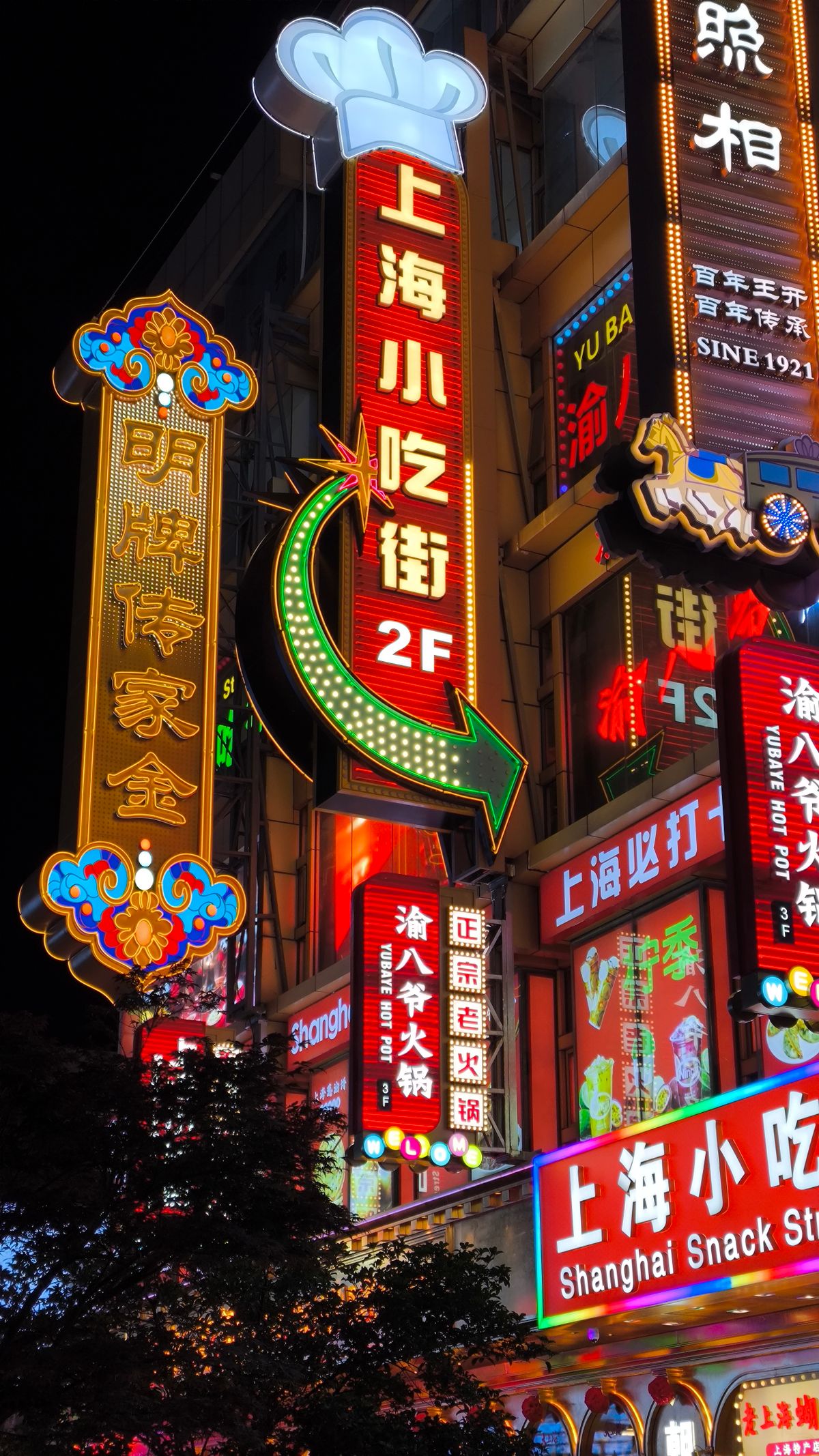
Publication data, translators, directors, release dates, festival records and shooting locations follow FACTS F94–F96, verified on 2026-11-12 against publisher pages (Stanford UP, HarperCollins), library catalogues (Library of Congress, WorldCat, National Library of Australia, Morgan Library, Internet Archive, Stanford SearchWorks), IMDb and Douban, the Festival de Cannes official film page, the 76 Days official site, the Academy's 93rd Oscars shortlist announcement, MoMA press and archival documents, and Chinese press reports (China News, CCTV, 1905.com, Jingchu Net). Corrections to the site's earlier text are recorded in F94–F95b: Rowe's second volume covers 1796–1895, Children of the Bitter River was translated by Herbert J. Batt, Chi Li does have an English translation, Feng Shui withdrew from Tokyo, 76 Days was shortlisted rather than nominated, and The 400 Million's MoMA status is stated as a screening plus archival holdings rather than collection ownership. Titles with no verifiable publisher page or ISBN are labelled as such rather than guessed. Outbound links are held in data/reference-links.json and expanded by the builder; dead or unverifiable URLs were removed during the check. Copyright reasoning for the no-cover / no-poster policy is F97. All five photographs are from Pexels, listed in data/image-credits.json; the neon street is Shanghai, not Wuhan. Class C: re-check availability, links and any newly translated editions yearly. See the source method.
Every CNY amount on this page is shown twice: the yuan figure you will actually see on the price board, and a US dollar conversion for budgeting. Dollar values are mid-market conversions at 1 CNY = $0.14957 (ExchangeRate-API (open.er-api.com), 12 Nov 2026), refreshed automatically when the page loads and cached for 24 hours. Your bank or card issuer will use its own rate and may add a foreign-transaction fee. Full explanation.
Checked yearly — geography, history and background. This page was last checked 2026-11.